Vibration analysis checks whether a structure or piece of equipment will resonate — vibrate excessively — under normal operating conditions. Fatigue analysis checks whether repeated stress cycles, even well below a structure’s maximum load limit, will eventually cause cracking and failure over its working life. Both use FEA (Finite Element Analysis) to predict these risks on a digital model before anything is built or installed — because both failure modes are notoriously hard to catch with a simple one-time strength calculation. Find out what vibration & fatigue analysis can do for your projects.
What vibration analysis & fatigue analysis actually measure
Vibration analysis (modal analysis)
Every structure has natural frequencies — the frequencies at which it “wants” to vibrate if disturbed. If an operating machine, a passing load, or wind buffeting happens to match one of those natural frequencies, the structure resonates: vibration amplitude builds up far beyond what the disturbance alone would cause. This is the same basic physics as pushing a swing at exactly the right moment on every cycle — small inputs, matched to the right timing, add up to a large result.
Modal analysis is the FEA technique used to find a structure’s natural frequencies before it’s built, so engineers can check whether any of them fall dangerously close to a known operating frequency — a motor’s running speed, a fan’s blade-pass frequency, wave action, or wind buffeting.
Fatigue analysis (cyclic loading)
Fatigue is a different failure mode entirely. A structure can be well within its strength limit for any single load event and still fail — because repeated loading and unloading, over thousands or millions of cycles, gradually damages the material at a microscopic level until a crack initiates and grows. This is why fatigue failures often catch people off guard: nothing looks wrong right up until it does.
Fatigue analysis uses FEA results (the stress at each point in a structure under a given load) combined with material-specific S-N curves (data showing how many cycles a material can survive at a given stress level) to estimate how long a structure or component can realistically be expected to last under its actual operating loads — not just whether it survives one worst-case event.
Why these failures are dangerous — they’re slow, and often invisible until it’s too late
The reason vibration and fatigue get their own category of analysis, separate from a basic strength check, is that both failure modes can develop in a structure that passed every static strength calculation with room to spare. A structure doesn’t need to be under-designed for its peak load to fail from fatigue — it just needs to be exposed to enough repeated cycles at a stress level that, individually, looks harmless.
This isn’t a theoretical risk. It’s a well-documented pattern in engineering history — one of the more famous examples being the brittle hull fractures that affected a number of Liberty Ships during the Second World War, traced back to stress concentration at sharp hull openings under repeated sea loading. The fixes that followed (rounding corners, reinforcing high-stress details) are still basic fatigue-design principles used today. The lesson holds regardless of industry: stress concentrations and repeated cycling are what fatigue analysis is built to catch, and they’re exactly the details a quick, one-time strength check tends to miss.
Where this comes up on Singapore and regional projects
In our own project work, vibration and fatigue risk shows up most often in a few recurring situations:
- Rotating equipment foundations — generators, pumps, and fans create continuous cyclic vibration, and a foundation or support structure that isn’t checked against the equipment’s actual operating frequency can resonate in ways a static load check would never flag.
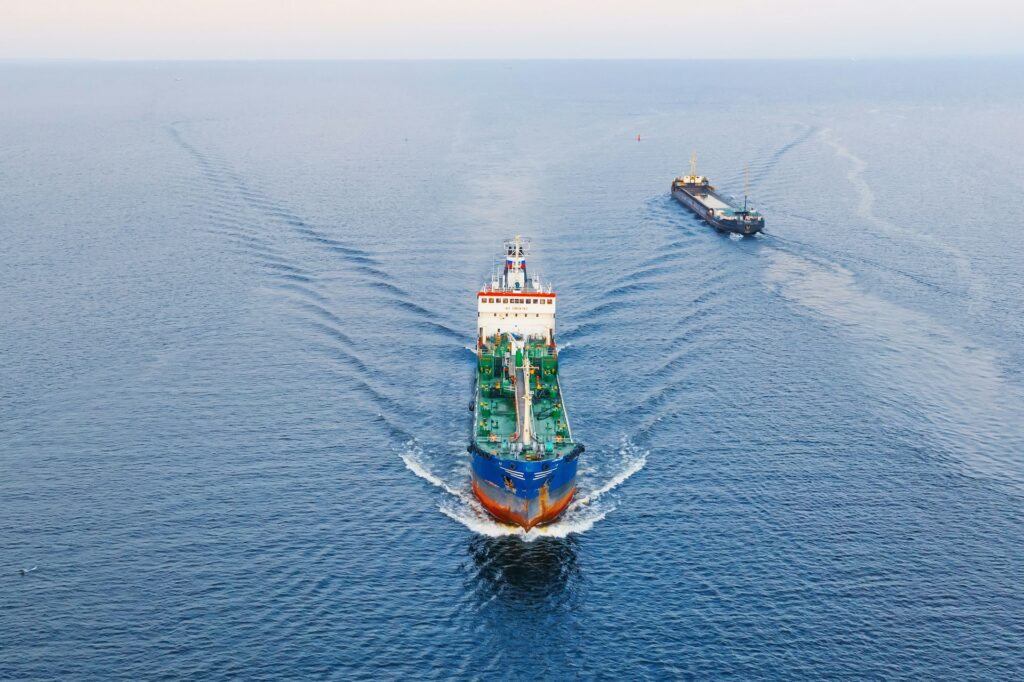
- Marine and offshore structures — vessels, terminals, and platforms are subject to constant wave-driven loading. This is exactly the kind of problem where CFD (to establish wave impact and sloshing loads) and FEA (to run the resulting fatigue analysis) work as a connected pair rather than separate exercises — the same combined-methods approach we’ve used on roofing structures under wind loading (see our FEA vs CFD guide for how that pairing works).
- Roof and facade structures under repeated wind loading — a structure that comfortably survives a single design-wind-speed event can still be at risk of fatigue cracking from years of smaller, more frequent wind cycles, particularly at connection points and fixings.
How FEA catches these risks before installation
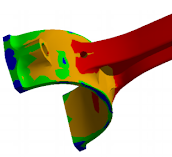
The practical value here is timing. Vibration and fatigue analysis run at the design stage — before fabrication, before installation — mean any risk gets caught while it’s still a modelling change, not a site problem.
A typical process looks like:
- Build the structural model and apply the actual expected operating loads — not simplified textbook assumptions, but the real cyclic loading the structure or equipment will see (rotating equipment speed, expected wave spectrum, wind cycle data, etc.).
- Run modal analysis to identify natural frequencies and flag any that sit close to a known operating or excitation frequency.
- Run fatigue analysis using the stress results from the loaded model, combined with the correct S-N curve for the material and detail type in question, to estimate fatigue life against the structure’s intended service life.
- Adjust the design where either check flags a problem — this is usually a targeted fix (added stiffening, a revised connection detail, a shifted natural frequency) rather than a full redesign, precisely because it’s caught early.
What happens when this step gets skipped
The alternative to catching this at the design stage is catching it in service — and vibration and fatigue problems in service tend to be expensive in a specific way: they’re rarely a single dramatic failure. More often, it’s unplanned downtime for inspection once unusual vibration or an early crack is noticed, followed by a retrofit that has to work around equipment that’s already installed and operating, rather than being designed in from the start. That sequencing — fix-in-place versus design-in-early — is usually where most of the added cost comes from.
FAQ block for Vibration & Fatigue Analysis
What is the difference between vibration analysis and fatigue analysis? Vibration analysis checks whether a structure will resonate at its operating frequency, causing excessive vibration amplitude. Fatigue analysis checks whether repeated loading cycles, even at low stress, will eventually crack the material. They’re related but separate checks — a structure can pass one and still be at risk from the other.
How do I know if my equipment foundation needs vibration analysis? Any foundation or support structure for rotating or reciprocating equipment (generators, pumps, compressors, large fans) is a reasonable candidate, since these all create continuous cyclic loading at a known operating frequency.
What is fatigue failure and why does it happen without warning? Fatigue failure happens when repeated stress cycles — each individually well within the material’s strength limit — gradually damage the material until a crack initiates and grows. It’s dangerous precisely because a structure can pass a static strength check with room to spare and still fail from fatigue over time.
Can FEA predict how long a structure will last? FEA-based fatigue analysis can estimate a structure’s likely fatigue life under its expected operating loads, using stress results combined with material-specific S-N curve data. It’s an engineering estimate based on the loading and material data used, not a guarantee — accuracy depends on how closely the modelled loading matches real-world operating conditions.
Do rotating equipment installations need FEA before commissioning? It’s not universally mandatory, but it’s standard good practice for equipment foundations and supporting structures, since resonance and fatigue risks are difficult to catch with a basic static strength calculation and are far cheaper to fix in the design model than after installation.