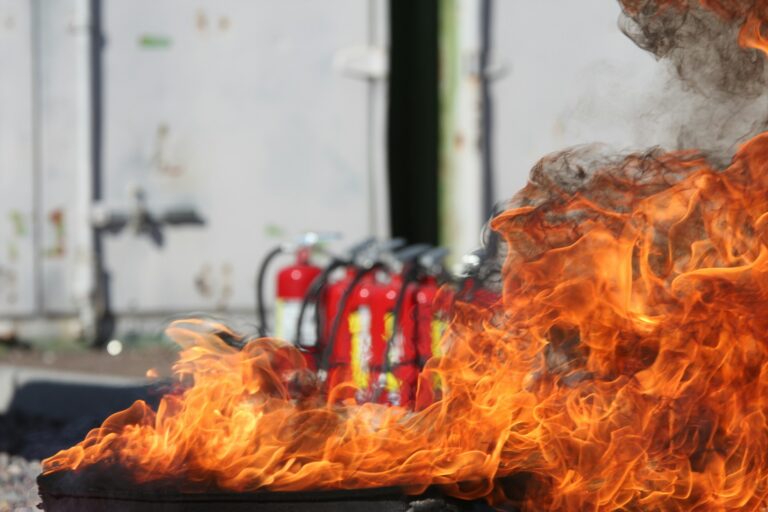
FEA (Finite Element Analysis) and CFD (Computational Fluid Dynamics) are both engineering simulation methods, but they answer different questions. FEA tells you how a solid structure behaves under load — whether it bends, cracks, vibrates, or fails. CFD tells you how a fluid behaves — how air, water, or gas moves, and how pressure, temperature, and velocity change as a result.
Neither one is “better.” They’re tools for different jobs. Confusing the two — or assuming one can substitute for the other — is one of the more common (and expensive) mix-ups we see on Singapore projects.
What is FEA (Finite Element Analysis)?
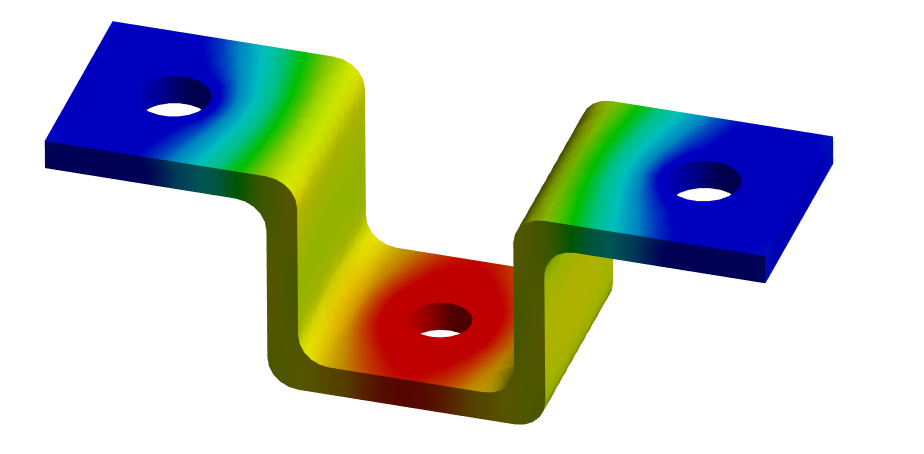
FEA is a computer simulation method that breaks a physical structure — a roof, a foundation, a tank, a piece of equipment — into thousands of small, connected pieces called elements (this is why it’s also called the Finite Element Method, or FEM). Each element’s behaviour under a given force is calculated, and the results are combined to predict how the whole structure responds.
In practice, this means an engineer can apply a load — wind pressure, a vehicle’s weight, vibration from rotating machinery — to a digital model of a structure and see exactly where stress concentrates, how much it deforms, and whether it will hold.
What FEA is actually used for
- Structural strength checks — will this beam, bracket, or foundation hold the load it’s designed for?
- Vibration and fatigue — will repeated stress cycles (from wind, machinery, or waves) cause cracking over time, even if the structure survives a single peak load?
- Thermal expansion — how much will a structure move as temperatures change, and does that movement create stress at joints or connections?
What is CFD (Computational Fluid Dynamics)?
CFD is also a computer simulation method, but it models how fluids move — and “fluid” here means air, water, gas, or smoke, not just liquids. It’s built on the same mathematical family of equations (the Navier-Stokes equations) used to describe fluid flow, solved numerically over a 3D model of a space or object.
The output is a detailed picture of airflow patterns, temperature distribution, pressure differences, or smoke movement — the kind of thing that’s very difficult to predict accurately by hand calculation alone, especially in a real building with obstructions, multiple air sources, and irregular geometry.

What CFD is actually used for
- Airflow and cooling — data centre hot spots, natural ventilation for Green Mark certification, HVAC design validation
- Wind loading on a structure — how wind pressure distributes across a building or roof (this result often becomes an input to an FEA structural check — more on that below)
- Smoke and fire behaviour — how smoke spreads and how quickly a space clears during a fire event
FEA (finite element analysis) vs CFD (Computational Fluid Dynamics): the difference in plain English
| FEA | CFD | |
| Models | Solid structures | Fluids (air, water, gas, smoke) |
| Answers | Will it break, bend, or fatigue? | How does it flow, and what does that do to pressure/temperature? |
| Typical output | Stress, deformation, vibration, fatigue life | Airflow paths, temperature maps, pressure, smoke movement |
| Common Singapore use case | Roof structure under wind load, equipment foundation vibration | Data centre cooling, Green Mark natural ventilation, fire/smoke simulation |
The one-line version: if the question is about a fluid moving, it’s CFD. If the question is about a solid surviving a load, it’s FEA.
Why some projects need both — not either/or
Here’s where it gets more interesting than a simple comparison table. On a lot of real projects, FEA and CFD aren’t competing options — they’re sequential steps in the same analysis.
A common example: wind doesn’t apply a single, uniform push on a building or roof. It creates a complex, uneven pressure pattern that depends on the structure’s shape, nearby buildings, and wind direction. CFD is what calculates that pressure pattern accurately. Once you have it, that pressure data becomes the load input for an FEA structural check — which tells you whether the roof, cladding, or supporting frame can actually take it.
Run FEA on its own with a simplified, textbook wind load assumption, and you might be over-designing (wasting material and cost) or under-designing (missing a real risk) depending on how conservative that assumption was. Run CFD without a follow-up FEA check, and you know exactly how the wind behaves but still don’t know if the structure survives it.
A real example: how we’ve used both on the same building
This sequence is exactly why, on our own project list, you’ll find CFD and FEA run as a paired analysis on the same roofing structure — CFD to establish the actual wind pressure distribution across the roof geometry, and FEA to confirm the structural frame holds up under that specific loading. Neither analysis alone would have answered the full question the client needed answered.
We’ve seen the reverse mix-up too: a client scopes a tender for “CFD on the roof” when the actual concern is whether the structure will crack under repeated wind loading over its lifetime — that’s a fatigue question, and fatigue is FEA territory. Getting the scope wrong before a tender goes out usually means paying for a second round of analysis later, on the client’s dime.
How to know which one your project needs
A few quick questions usually settle it:
- Is the question about air, water, gas, or smoke moving through or around something? → CFD.
- Is the question about whether something will bend, crack, vibrate, or fail under load? → FEA.
- Does the load itself come from a fluid (wind pressure, wave impact, water flow) and you need to know if the structure survives it? → You likely need both, run in sequence — CFD first to establish the load, FEA second to check the structure against it.
If you’re not sure which category your question falls into, that’s a normal place to start a conversation — it’s easier to scope correctly upfront than to redo analysis after a tender is already underway.
FAQ block
Is FEA the same as CFD? No. FEA (Finite Element Analysis) models solid structures under load — checking for stress, deformation, and fatigue. CFD (Computational Fluid Dynamics) models how fluids like air, water, or smoke move. They use related mathematical methods but answer different engineering questions.
Do I need both FEA and CFD for my project? Only if your structural question depends on a fluid-generated load. Wind pressure on a roof, wave impact on a marine structure, or airflow-driven vibration are all cases where CFD calculates the load and FEA checks the structure against it. If your question is purely about airflow or purely about static structural strength, you may only need one.
Which is more accurate, FEA or CFD? Neither is inherently more accurate — accuracy depends on how well the simulation is set up (mesh quality, correct boundary conditions, correct material or fluid properties) for the specific problem, not on which method is used.
Can CFD replace structural calculations? No. CFD tells you how a fluid behaves and what pressure or thermal load it creates. It doesn’t tell you whether a structure can withstand that load — that’s what FEA is for.
What software is used for FEA and CFD? Common FEA tools include ANSYS Mechanical, Abaqus, and Nastran. Common CFD tools include ANSYS Fluent, Star-CCM+, and OpenFOAM. Some platforms (like ANSYS) offer both under one suite, which is one reason the two terms sometimes get blurred together in casual conversation.