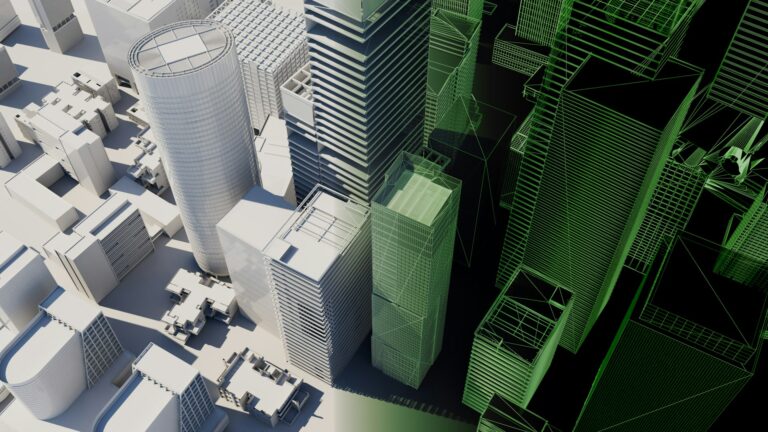
If you’ve been told your project needs “building performance simulation” for a Green Mark submission, there’s a good chance someone on your team is picturing an energy model — a spreadsheet-style prediction of kilowatt-hours and utility bills. That’s only one piece of it. Building performance simulation (BPS) is the umbrella term for using computer models to predict how a building will actually behave — covering energy consumption, airflow and natural ventilation, thermal comfort, and daylight — before a single wall goes up.
Confusing BPS with energy modelling isn’t just a terminology slip. We’ve seen it cause real project delays: a team commissions an energy model, assumes the simulation scope is covered, and only discovers late in the process that Singapore’s Building and Construction Authority (BCA) also expects a separate ventilation simulation for natural ventilation and thermal comfort — a different discipline, run with different software, by a different kind of engineer.
This article breaks down what building performance simulation actually covers, why Singapore’s own Green Mark framework treats these as distinct disciplines rather than one exercise, and what that means for how you scope a project.

The Four Core Domains — Energy, Airflow, Daylight and Comfort
At its core, BPS uses mathematical models to predict how a building will perform across four interconnected areas:
- Energy — how much power the building will consume, and where
- Airflow and ventilation — how air moves through and around the building, indoors and outdoors
- Thermal comfort — whether occupants will actually feel comfortable in the spaces they use
- Daylight — how much natural light reaches interior spaces, and what that does to glare and heat gain
Academic literature on the subject is consistent on this point: energy modelling is one output of BPS, not the whole field. Thermal simulation, lighting (daylight) simulation, acoustic simulation, and airflow simulation are treated as separate, named sub-domains — some tools cover only one, and the more sophisticated “whole-building” platforms attempt to model several together because they don’t act independently in the real world.
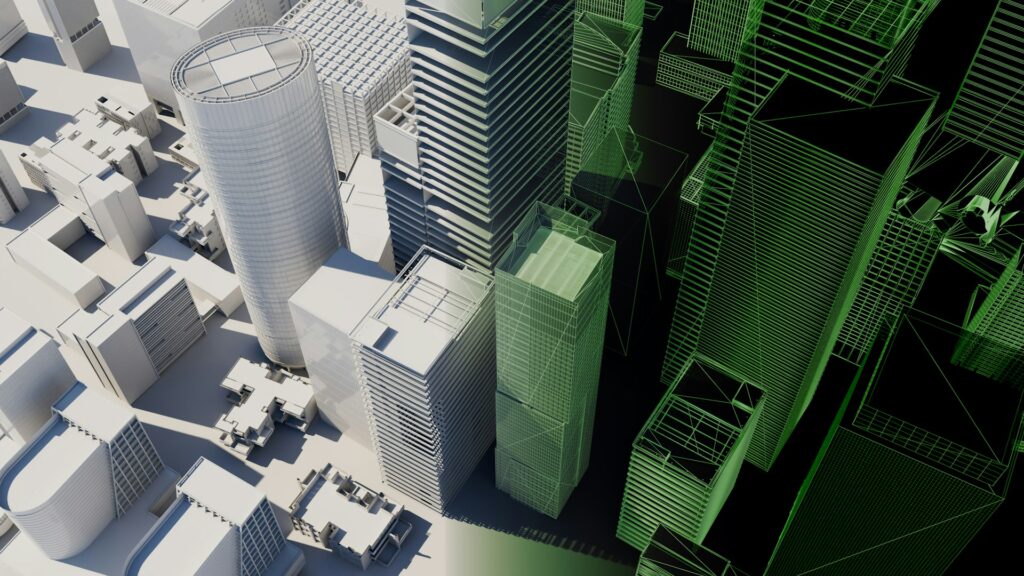
Why Reducing Building Performance Simulation (BPS) to “Just Energy Modelling” Causes Problems
The short answer: Singapore’s own certification body doesn’t treat them as one thing, so neither should your project brief.
Green Mark Already Treats Them as Separate Disciplines
BCA’s Green Mark 2021 Certification Standard doesn’t bundle energy and airflow into a single methodology. It documents them as two distinct technical chapters — a Ventilation Simulation Methodology and Requirements section and a separate Energy Modelling Methodology and Requirements section. That’s not an accident of formatting. It reflects the fact that predicting a building’s energy consumption and verifying that a naturally ventilated space actually meets airflow and comfort benchmarks are two different engineering exercises, using different physics, different software, and often different consultants.
BCA introduced computational fluid dynamics (CFD) — a simulation method that models how air, heat and pollutants move through a space — into Green Mark assessments specifically because simpler, rule-of-thumb approaches (like fixed cross-ventilation depth limits) can’t account for complex building geometries, dense urban sheltering, or Singapore’s variable tropical wind conditions. An energy model doesn’t do this job, and isn’t meant to.
What We See Go Wrong When Airflow and Comfort Are an Afterthought
In our own work running CFD and thermal comfort simulations for Green Mark and MEP projects, the same pattern comes up repeatedly: a client has an energy model in hand, believes the simulation requirement is satisfied, and then finds out — usually at submission stage — that the natural ventilation or thermal comfort evidence BCA is asking for was never produced. At that point, it’s a scramble: geometry and drawings that should have been shared early get requested under time pressure, and a task that could have run in parallel with the energy modelling instead sits on the critical path right before a deadline.
The fix isn’t complicated — it’s scoping the simulation work correctly from the start, based on what the project actually needs, not what one software package happens to output.
The Four Domains, Explained in Plain English
Energy Modelling
Energy modelling predicts how much energy a building will use — and where that consumption comes from (chillers, lighting, lifts, plug loads, and so on) — based on the building’s design, systems, and expected occupancy. In Singapore, this is central to demonstrating Green Mark’s energy efficiency criteria, which BCA treats as a prerequisite rather than an optional add-on in the current scheme.
Airflow and Ventilation Simulation (CFD)
This is where our engineering work sits. CFD (computational fluid dynamics) simulates how air actually moves — through a naturally ventilated corridor, around a building’s massing, or through a mechanically cooled space. For Green Mark, CFD is the accepted method to demonstrate that habitable areas meet ventilation benchmarks in situations where simple prescriptive rules don’t apply: irregular building shapes, high-density surrounding developments, or projects targeting higher-tier certification. It’s also the tool used to evaluate thermal comfort and wind-driven rain exposure.
Thermal Comfort Simulation
Thermal comfort simulation asks a more human question: will the people actually occupying this space feel too hot, too cold, or fine? It draws on airflow data, surface temperatures, humidity and occupant activity levels to predict comfort outcomes — which matters both for Green Mark compliance and, frankly, for whether a naturally ventilated building works in practice rather than just on paper.
Daylight Simulation
Daylight simulation models how much natural light reaches interior spaces at different times of day and year, and what that means for glare, visual comfort, and the electric lighting load a building can avoid. It’s typically run by lighting or daylighting specialists rather than MEP/CFD engineers, but it doesn’t operate in isolation — daylight strategy has a direct knock-on effect on a building’s cooling load and, by extension, its energy model. Where a project’s simulation scope includes daylight, we coordinate with the specialists handling that piece to keep the energy and thermal comfort models consistent with what’s actually being designed.
How These Domains Interact in Singapore’s Climate
The Daylight–Heat Gain Trade-off in Tropical High-Rises
Singapore’s climate makes these interactions sharper than in temperate countries. Research into daylight performance in local high-rise offices — including case studies of tropical office towers — consistently finds the same tension: letting in enough natural light to reduce electric lighting use also increases solar heat gain and glare risk, particularly at building perimeters. Get the balance wrong, and a design decision made purely for daylighting ends up pushing cooling loads up, which shows up in the energy model as a problem nobody flagged early.
Natural Ventilation vs. Energy Savings
The same tension exists between natural ventilation and energy performance. A naturally ventilated space can meaningfully cut air-conditioning load — but only if the airflow simulation confirms the design actually delivers adequate air movement and comfort. Without that verification, “natural ventilation” is an assumption dressed up as a strategy.
What This Means for Your Green Mark or Design Project
When One Model Isn’t Enough
If your project involves any of the following, an energy model alone won’t cover the simulation requirements: naturally ventilated spaces, non-standard building geometry, dense surrounding developments, higher-tier Green Mark targets (GoldPlus, Platinum, Super Low Energy), or design decisions that trade off daylight against heat gain. In these cases, the ventilation and thermal comfort simulation isn’t a nice-to-have — it’s the evidence BCA is specifically asking for.
Coordinating Multiple Simulation Disciplines Without Losing Time
The practical fix is sequencing, not more software. Energy modelling, CFD/ventilation simulation, and (where relevant) daylight simulation can run in parallel rather than in sequence, provided the design geometry and inputs are shared with every consultant at the same point in the project timeline — not handed to the CFD engineer only after the energy model is finished and questions start coming back from the authority.
If you’re scoping a Green Mark project and aren’t sure whether your current simulation package covers what BCA will ask for, that’s worth a conversation before submission, not after.
FAQ for Building Performance Simulation
Is building performance simulation the same thing as energy modelling?
No. Energy modelling is one part of building performance simulation. BPS also covers airflow and ventilation simulation (often run using CFD), thermal comfort simulation, and daylight simulation. Singapore’s BCA Green Mark framework documents energy modelling and ventilation simulation as separate methodologies for exactly this reason.
Do I need CFD simulation if I already have an energy model for my Green Mark submission?
It depends on the project. If your building includes naturally ventilated spaces, unusual geometry, or dense surrounding developments, BCA typically expects CFD-based ventilation and thermal comfort evidence in addition to the energy model — an energy model alone doesn’t demonstrate airflow performance.
What’s the difference between building performance simulation and BIM?
BIM (Building Information Modelling) is a 3D digital representation of a building’s design and data. Building performance simulation uses models — sometimes built from BIM geometry — to predict how the building will actually perform: energy use, airflow, comfort, or daylight. BIM is the model of the building; BPS is the analysis of how it behaves.
Does building performance simulation include daylight simulation?
Yes, daylight is one of the four core domains of BPS, alongside energy, airflow and thermal comfort. In practice, daylight simulation is usually run by lighting or daylighting specialists, while airflow, thermal comfort and energy modelling are handled by MEP/CFD engineers — the disciplines need to be coordinated rather than treated as one exercise.
How much does building performance simulation cost for a project in Singapore?
It varies significantly based on which domains are in scope (energy modelling alone vs. energy plus CFD plus daylight), building complexity, and certification tier being targeted. The most reliable way to get an accurate figure is to have your project’s drawings and Green Mark target reviewed directly rather than working off a generic estimate.