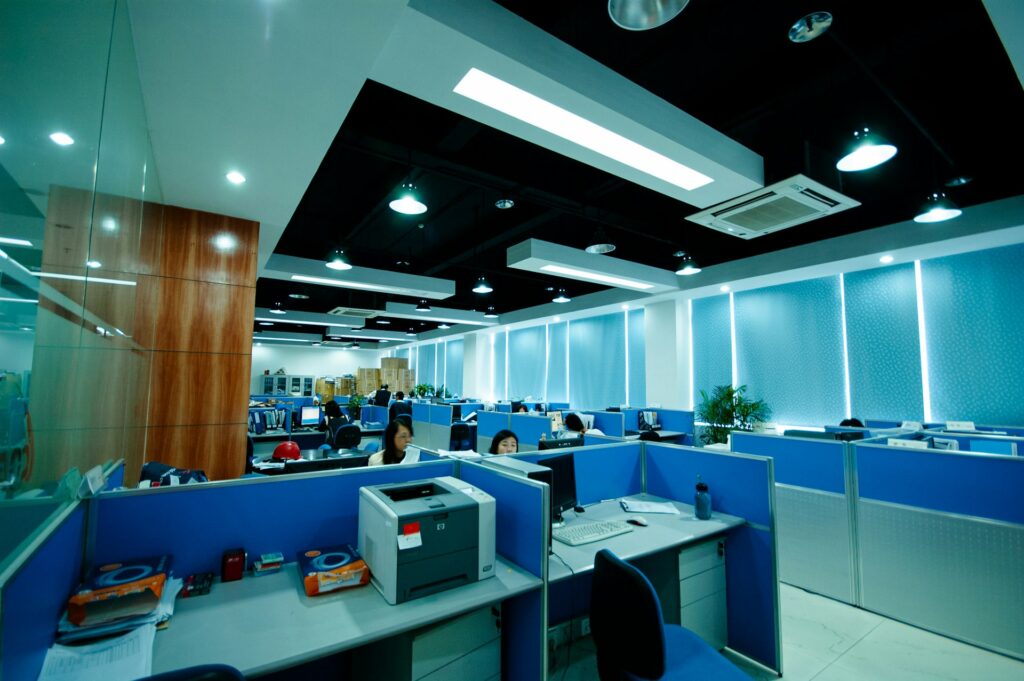
If your office feels stuffy, the air-con is probably not broken. It’s probably not even set wrong. Check the panel and you’ll usually find the thermostat sitting exactly where facilities set it — 23°C, 24°C, nothing unusual. And yet by 3pm, half the floor is reaching for a jacket while the other half is fanning themselves with a notebook, and the meeting room by the lift always feels like it needs a window that doesn’t exist.
That split is the clue. A temperature problem affects a room evenly. An airflow problem doesn’t — it creates pockets. Some parts of the space get cooled and refreshed properly; others barely get touched by moving air at all. The second scenario is far more common in Singapore office buildings than most tenants, HR managers, and even facility managers realise, and it’s a completely different problem from “the air-con needs servicing.”
This article explains what’s actually going on when a well-maintained, correctly set air-conditioning system still leaves a space feeling stale — and how engineers diagnose it using a technique called CFD ventilation analysis, rather than guesswork.
It’s Probably Not the Temperature — It’s Where the Air Isn’t Going
Stuffiness is usually a symptom of poor air distribution, not poor cooling. Air distribution is simply how evenly conditioned air actually spreads through a room, as opposed to how much cold air the system is pumping out in total.
A commercial air-conditioning system doesn’t cool a room by lowering the temperature of the whole volume of air at once. It pushes cool, dehumidified air in through diffusers (the grilles in the ceiling), and that air is supposed to mix with the room air, pick up heat and stale air, and get pulled back out through return vents. When that mixing process works properly, the room feels even and fresh throughout. When it doesn’t, you get:
- Stratification — cool air sinks and pools near the floor while warmer, staler air rises and sits near head height, which is exactly where people are breathing it.
- Dead zones — corners, enclosed meeting rooms, or desks tucked behind partitions that the supply air never really reaches, so the air there just sits and recirculates on itself.
- Short-circuiting — supply air escaping straight into the return vent without ever properly mixing into the occupied space, so the system reports that it’s delivering plenty of air while the room barely feels it.
None of these show up on a thermostat. A wall-mounted sensor reads the temperature at one point in the room — usually near the corridor, away from where people actually sit — and reports back a perfectly normal number, even while three-quarters of the floor is stagnant.
This is also why “it feels stuffy” and “it feels too warm” get treated as the same complaint when they’re not. Stuffiness is about air movement and freshness — how much stale, CO2-laden, moisture-heavy air is being cleared out and replaced. Temperature is about heat. You can have a room that’s the correct temperature and still stuffy, because nobody engineered where the air actually flows once it leaves the diffuser.
How to Tell If You Have an Airflow Problem, Not a Temperature Problem
Before calling in an engineer, it’s worth doing a quick gut check. These are the patterns facilities teams and tenants typically notice when the root cause is airflow distribution rather than the chiller or thermostat setting:
- Complaints cluster in specific spots — one meeting room, one corner, one row of desks — rather than the whole floor.
- The room “feels” fine at 9am and gets noticeably worse by mid-afternoon, especially as headcount in the room builds up.
- Enclosed meeting rooms or huddle spaces feel far worse than the open floor around them.
- Some staff are cold enough to keep a cardigan at their desk while others nearby are visibly warm — in the same room, at the same time.
- Turning the thermostat down doesn’t help, or only helps for a short while before the stuffiness returns.
- The problem started (or got worse) after a fit-out, a re-partitioning, or a change in seating density — even though nobody touched the air-con system itself.
If most of that sounds familiar, you’re very likely dealing with a distribution problem, not a cooling capacity problem. That distinction matters, because the two are fixed in completely different ways — and the wrong fix (usually: turning the temperature down further) can make things worse.

What’s Actually Causing the Poor Airflow
Airflow problems in Singapore commercial buildings tend to trace back to a small set of recurring causes. Most of them have nothing to do with the mechanical equipment itself — the chiller and air handling units are usually working exactly as designed. The problem is what happened to the room after the system was designed.
Open-plan renovations built on an old air-con design
A huge number of Singapore offices have been reconfigured — walls added or removed, an open floor turned into a warren of meeting rooms, headcount doubled through hot-desking — without anyone revisiting the original air-conditioning design. That design was calculated for a specific layout, a specific occupant load, and a specific set of partitions. Change the layout significantly and the airflow pattern the engineers originally calculated no longer applies, even though the equipment hasn’t changed at all.
Furniture and partitions blocking the air supply
Height-adjustable desks, tall storage cabinets, glass partition walls, and acoustic pods are all common in modern Singapore offices — and all of them can sit directly in the path between a diffuser and the people it’s meant to serve. A single filing cabinet in the wrong spot can create a dead zone for the three desks behind it.
Diffuser layouts that don’t match how the space is actually used
Diffusers are usually positioned to match the original floor plan. If a meeting room got built where there used to be open desks, it may be relying on a diffuser that was only ever sized to serve a walkway, not a room full of people generating heat and exhaling CO2 for an hour-long call.
“Short-circuiting” between supply and return air
If a supply diffuser and a return vent sit too close together, or a room’s air path is short and direct, cool air can travel almost straight from one to the other without properly circulating through the space first. The system logs show air moving. The room doesn’t feel it.
More people in the room than the system was designed for
Every air-conditioning system is sized around an assumed number of occupants per square metre. Singapore’s shift toward hot-desking and denser seating means many floors now hold more people, more laptops, and more heat-generating equipment than the original design load — particularly in meeting rooms, which are often the smallest, most enclosed, and most heavily used spaces on a floor.
Why Turning the Air-Con Colder Doesn’t Fix It (and Can Make It Worse)
The instinctive response to a stuffy room is to drop the temperature setpoint. It’s an understandable reaction — and it’s treating the wrong variable.
If the actual problem is that air isn’t reaching a dead zone, making the supply air colder doesn’t get more of it into that dead zone. It just makes the areas that are being reached uncomfortably cold, while the stuffy pocket stays stuffy. This is exactly the pattern behind the classic office complaint of some staff freezing while others swelter in the same room — the setpoint has been pushed down to compensate for a spot that a colder setpoint was never going to fix.
It also costs money for no benefit. Running a chiller harder to compensate for a distribution problem increases energy consumption without addressing the airflow pattern that’s actually causing the complaint — you end up with a higher utility bill and the same stuffy corner.
What Is CFD Ventilation Analysis?
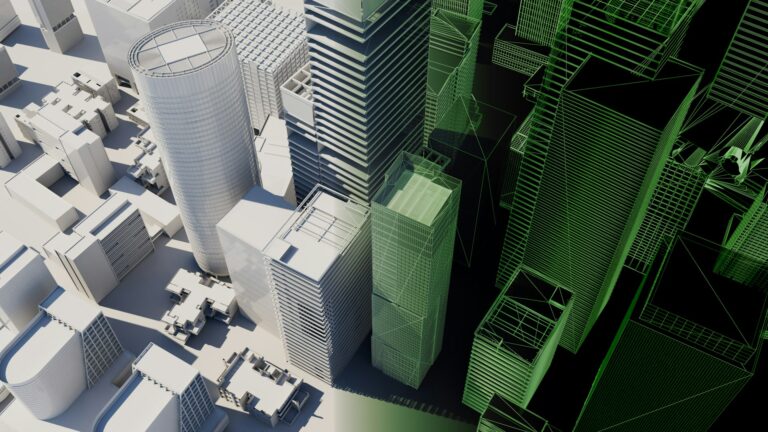
CFD stands for Computational Fluid Dynamics — a mouthful, but the concept behind it is straightforward. It’s a computer simulation that shows how air actually moves through a specific room or building, based on its real layout, its real furniture, its real diffuser positions, and the real number of people in it — rather than relying on the general assumptions used when the air-con system was first designed years ago.
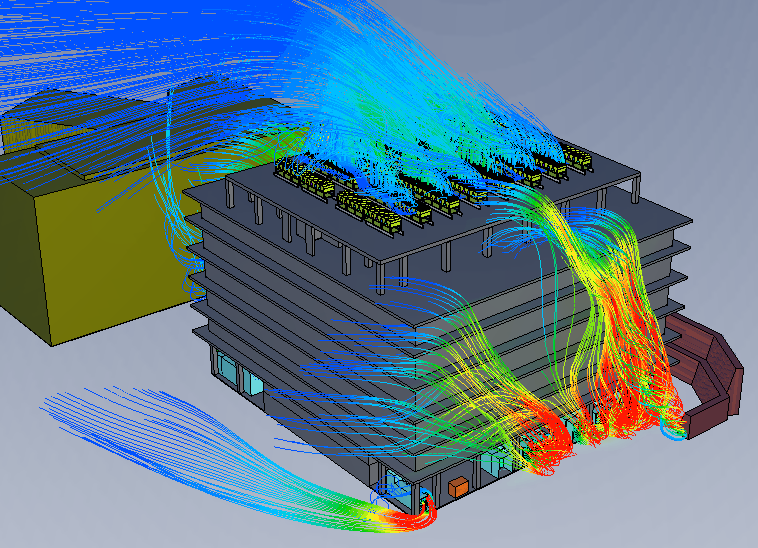
Instead of physically installing smoke pens or sensors and hoping to catch the problem in the act, engineers build a 3D digital model of the space and run a simulation of the airflow through it. The output is typically a colour-coded airflow map that shows, visually, where air is moving well, where it’s barely moving at all, where temperature is stratifying, and where fresh air from the diffusers is actually ending up before it reaches (or fails to reach) an occupant’s desk.
This matters because it replaces guesswork with evidence. Two rooms can look identical on paper — same air-con tonnage, same number of diffusers — and behave completely differently in practice, because airflow is sensitive to exactly the kind of small, real-world details (a cabinet in the wrong place, a partition wall, a change in seating density) that a simulation can capture and a spec sheet can’t.
In Singapore, this kind of analysis also ties into indoor air quality compliance. Singapore Standard SS 553 covers air-conditioning and mechanical ventilation design, and SS 554 sets out indoor air quality guidance for air-conditioned buildings — including how effectively fresh air needs to be delivered and how stale, CO2-heavy air should be managed. A CFD ventilation study can show whether a space is actually meeting the intent of those standards in its current, real-world layout, not just its original design.
What Happens During a CFD Ventilation Study
A CFD ventilation analysis generally moves through four stages:
1. Site data gathering. Engineers record the actual current layout — furniture, partitions, glass walls, diffuser and return vent positions, occupant density, and any equipment that generates heat (server racks, kitchen equipment, printers).
2. Building the 3D model. That real-world layout is recreated as a digital model, along with the air-conditioning system’s actual supply conditions — airflow rate, supply temperature, and how the system is currently configured to run.
3. Running the simulation. The software calculates how air moves through the modelled space, accounting for how supply air mixes with room air, how heat sources affect that airflow, and where stagnant or poorly-mixed pockets form.
4. Reading the results and recommending fixes. The output is a set of airflow and temperature maps for the space, which engineers use to pinpoint exactly where and why the distribution is failing — and to test proposed fixes (repositioning a diffuser, adjusting a damper, relocating furniture) in the model before anyone touches the physical building.
That last point is worth sitting with: because it’s a simulation, potential fixes can be tested and compared before any construction or system changes happen. That avoids paying to physically move a diffuser or reconfigure ductwork on a hypothesis that turns out not to solve the problem.
When It’s Worth Commissioning a CFD Ventilation Analysis
A full CFD study isn’t something every stuffy meeting room needs — sometimes the fix really is as simple as clearing a blocked diffuser or moving a filing cabinet. It tends to be worth commissioning when:
- Complaints are recurring and localised (the same room, the same corner, month after month) despite servicing and thermostat adjustments.
- You’re planning a fit-out, reconfiguration, or increase in seating density and want to know whether the existing air-con layout will still work before you commit to it.
- You’re taking on a new lease and want an objective read on a floor’s ventilation before signing, rather than relying on the previous tenant’s word.
- There’s a dispute between a tenant and landlord or building management over whether an IAQ or comfort complaint is justified, and both sides want an evidence-based answer rather than opinions.
- You’re pursuing BCA Green Mark certification or need to demonstrate that a space meets the intent of SS 553/SS 554 in its actual, current configuration.
In each of these situations, the value of CFD ventilation analysis is that it replaces “I think it’s the diffuser near the window” with an actual airflow map that shows exactly where the problem is and what specifically will fix it — which is a meaningfully better basis for spending money on a physical change than a guess, however well-informed.


The Bottom Line
A stuffy office is rarely a sign that the air-conditioning system is broken. Far more often, it’s a sign that the air isn’t being distributed the way the room now needs it to be — because the layout changed, the headcount changed, or the furniture changed, and nobody re-checked whether the airflow pattern still holds up. Turning the temperature down treats a symptom in the wrong place and adds to the energy bill without touching the actual cause.
CFD ventilation analysis exists precisely for this gap: it shows, with evidence rather than guesswork, where air is and isn’t reaching in a real, currently-occupied space, and what specific change will actually fix it. For a facility manager weighing up a stack of “the meeting room is stuffy again” emails, or a business owner trying to work out whether a new floor is fit for purpose before signing a lease, that’s the difference between fixing the right problem once and repeatedly adjusting a thermostat that was never the issue.
FAQs
Why does my office feel stuffy even when the air-con is running normally? Because “stuffy” is usually about how well conditioned air is actually reaching and mixing through the room, not how much cooling the system is producing overall. A system can be running exactly as intended and still leave pockets of a room poorly ventilated if the airflow pattern doesn’t match the current layout, furniture, or occupant density.
Is a stuffy office a health or air quality issue? It can be a sign that fresh air delivery and air mixing in the space aren’t meeting the intent of Singapore’s indoor air quality guidance (SS 554), since stuffiness is often linked to a build-up of CO2 and reduced fresh air exchange in poorly-ventilated pockets. Persistent stuffiness, headaches, or fatigue linked to a specific room are worth investigating rather than dismissing, and a CFD ventilation analysis is one way to get an objective read on whether the airflow itself is the cause.
How is CFD ventilation analysis different from just servicing the air-con? Servicing checks whether the mechanical equipment — chillers, filters, ductwork — is working as designed. CFD ventilation analysis checks something different: whether the air the equipment produces is actually reaching every part of the occupied space effectively, given the room’s real current layout. A system can pass a service check and still have a serious distribution problem.
How long does a CFD ventilation study take? It depends on the size and complexity of the space, but a single floor or a small number of problem rooms is typically a matter of weeks from data collection to a final report, not months. Larger buildings or multi-zone studies take longer.
Do I need a CFD study for a small stuffy meeting room, or is that overkill? Not always. If the issue is isolated, recent, and there’s an obvious candidate cause (a blocked diffuser, furniture placed right under a vent), it’s worth checking the simple fixes first. CFD ventilation analysis earns its cost when the cause isn’t obvious, the problem keeps recurring after simple fixes, or you’re making a bigger decision — a fit-out, a lease, a certification — where getting the answer wrong is expensive.