If you’ve ever sent the same brief to two CFD consultants in Singapore and gotten back two different numbers, you’re not imagining it, and neither report is necessarily wrong. Computational fluid dynamics (CFD) — the use of software to simulate how air, heat, or fluid moves through a building or system before it’s built — isn’t a single fixed calculation. It’s a modelling exercise, and every model is built on choices. Different providers make different choices. That’s where CFD Simulation results differ comes from.
This matters more than it sounds. A CFD report is often the thing standing between your project and a BCA Green Mark submission, a data centre going live at the wrong temperature, or a fire and smoke design that fails when it’s actually needed. If you can’t tell why two reports disagree, you can’t tell which one to trust — and that’s a hard position to be in when you’re the one signing off on the design.
Here’s what’s actually driving the differences, and what to check before you commission — or accept — a CFD report.

What Actually Changes Between One CFD Report and Another
The short answer: five technical decisions, made early in the process, that you as the client almost never see. Each one is a legitimate engineering judgment call — but each one also moves the final numbers.
The Mesh — How Finely the Model Is Divided
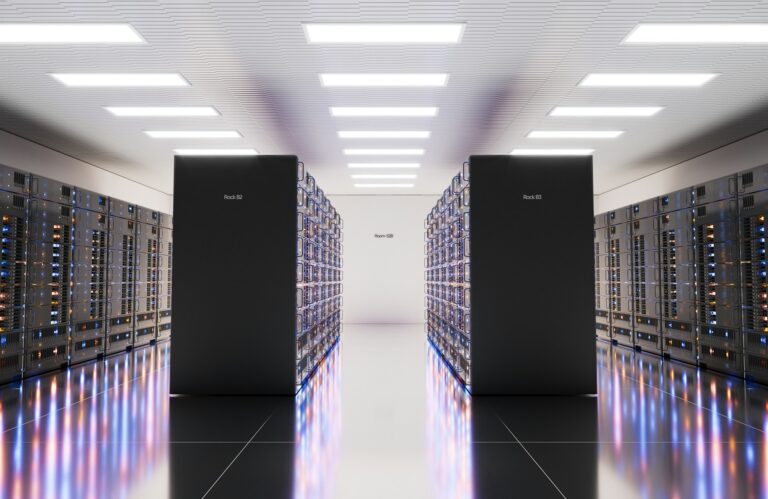
CFD software can’t solve fluid flow as one continuous problem. It breaks the space into millions of small cells — the “mesh” — and calculates the physics in each one. A coarser mesh runs faster and costs less. A finer mesh, especially near walls, vents, and equipment where the flow changes quickly, captures more of what’s actually happening. Two providers modelling the same server room with different mesh densities can land on materially different hotspot temperatures — even using identical software.
The way to catch this isn’t to ask “how fine is your mesh,” it’s to ask whether the provider ran a mesh independence check — re-running the model at a finer resolution to confirm the result has stopped changing. If a provider can’t tell you they did this, the mesh size was likely picked for turnaround time, not accuracy.
The Turbulence Model — Which Physics Get Approximated
Real airflow is turbulent, and turbulence is too computationally expensive to solve exactly for a full building. Every CFD provider uses a simplified turbulence model as a stand-in — and there are several in common use, each with different strengths. A model tuned for smooth, low-speed indoor airflow will behave differently from one built for high-speed external wind. Picking the wrong one for the physics in front of you introduces bias that no amount of mesh refinement fixes.
The Boundary Conditions — What Assumptions Go In
Before a solver runs, someone has to define what’s happening at the edges of the model: outdoor temperature, wind speed and direction, heat load per server rack, occupancy levels, door and window states. These are assumptions, not measurements — and where they come from varies a lot between providers. A boundary condition pulled from generic default values will produce a different (and less defensible) result than one built from your project’s actual equipment schedules, site-specific wind data, or as-built drawings.
The Software and Solver
Not all CFD software is interchangeable. General-purpose platforms like ANSYS handle complex multi-physics problems well; open-source engines like OpenFOAM are suited to large-scale parallel runs; and specialist tools built for one job — raised-floor data centre airflow, for instance — often out-perform generalist software on that specific task because they were built for it. A provider running every project through the same single tool, regardless of what the project actually needs, is optimising for their own convenience rather than your result.
How Much of the Real Geometry Was Kept
Simplifying the 3D model to make it easier to mesh and solve is normal — nobody models every cable tray and bracket. But how much detail gets stripped out, and what gets kept, is a judgment call that directly affects accuracy, particularly around equipment, obstructions, and anything that changes airflow at close range. A rushed model that simplifies away the wrong details will look clean and still be wrong.
Why “Different” Doesn’t Automatically Mean “Wrong”
It’s worth being clear about something here: CFD is a numerical approximation of physics, not a lookup table with one correct answer. Even a well-built, properly validated simulation carries some margin of deviation from real-world performance — that’s inherent to the method, not a sign of a bad consultant. Two providers can both follow sound practice and still land on numbers that differ by a meaningful margin, simply because they made different (defensible) assumptions about boundary conditions or used a different turbulence model suited to a different aspect of the problem.
The distinction that actually matters isn’t “do the numbers match” — it’s whether each provider can explain, in plain terms, why they made the choices they made, and whether those choices were checked against real-world behaviour, code requirements, or a physical benchmark. A provider who can walk you through their assumptions is doing engineering. A provider who can only show you a colour-coded airflow picture is showing you output.
Why This Matters More in Singapore Than It Does Elsewhere
BCA Green Mark Submissions
If your CFD report supports a Green Mark submission, this stops being a theoretical accuracy question and becomes a pass/fail one. BCA’s Green Mark 2021 Guideline on CFD Simulation sets a minimum technical bar for how these simulations are meant to be run — including the turbulence modelling approach and the wall treatment used. A report built on a shortcut that falls under that bar can get flagged in review regardless of how “reasonable” the final numbers look, sending you back to redo work and pushing your submission timeline out by weeks.
Data Centres and Other Mission-Critical Facilities
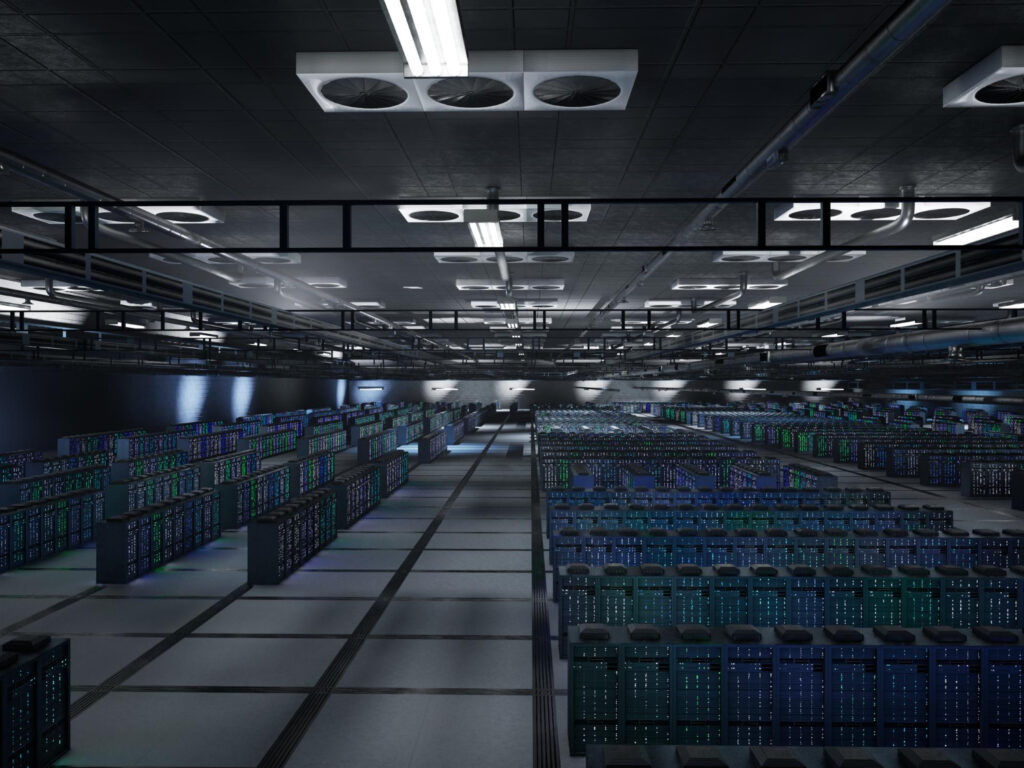
For data halls, cleanrooms, and other environments where downtime or non-compliance is expensive, the stakes of a poorly-assumed boundary condition are higher than a slightly-off comfort number. A CFD model that under-represents a worst-case scenario — a partial load shift, a lost redundant cooling unit, an abnormal fan speed — won’t show you the failure mode you actually need to design around. In Singapore’s tropical, high-humidity climate, generic default assumptions travel even less well than they would in a more temperate market.
The Real Divide: A Validation Report vs. an Engineering Decision
Underneath all five technical variables above sits a bigger difference between providers: what they’re actually trying to give you.
Some CFD vendors are set up to run a model, generate a colour contour plot, and confirm whether your layout passes or fails a generic threshold. That’s validation — and it’s the cheapest, fastest thing a CFD provider can sell you. It’s also, on its own, not usually enough to act on.
Our own approach at Megagenix is built around going further than that: applying engineering interpretation to the raw simulation output to find out why a hotspot exists, what’s actually driving an inefficiency, and what specific, practical change fixes it — not just whether the design technically clears a bar. That distinction is where the real value of a CFD engagement sits. It’s also why the same brief can come back from two providers with the same underlying accuracy and two very different levels of usefulness: one gives you a pass/fail stamp, the other gives you a decision you can act on.
How to Evaluate a CFD Specialist in Singapore Before You Commission a Report
If you’re comparing quotes from a few CFD consultants — or trying to sanity-check a report you’ve already received — these are the questions that actually separate rigorous work from a fast, generic run.
Questions to Ask About Methodology
- Did you run a mesh independence check, and can I see it?
- Which turbulence model did you use for this application, and why that one?
- Where did your boundary condition assumptions come from — site data, equipment schedules, or defaults?
- How much of the real geometry did you simplify, and what stayed in?
- What software did you run this on, and is it suited to this specific problem?
Questions to Ask About Track Record
- Who’s interpreting the results — a practicing engineer, or an operator running a template?
- Have you delivered CFD work that’s passed BCA, SCDF, or equivalent regulatory review before?
- Can I see a project with a comparable scope and outcome?
Red Flags in a CFD Report You’ve Already Received
- No mention of mesh resolution, turbulence model, or boundary condition source anywhere in the methodology section
- A result that exactly clears a pass/fail threshold with no margin or sensitivity discussion
- No convergence or residual data included
- Recommendations that stop at “the design passes” with no explanation of what’s driving the numbers
Getting a Second Opinion on a CFD Report
If a CFD report has come back and something about it doesn’t add up — the numbers seem too clean, the methodology section is thin, or a Green Mark or fire safety reviewer has already pushed back on it — a second technical read is usually faster and cheaper than living with a design decision you can’t fully explain.
Megagenix reviews CFD reports from other providers as part of our CFD consulting services, and our engineers work across data centre cooling, thermal analysis, and Green Mark CFD submissions, so we can usually tell within a short review whether the assumptions behind a report will hold up. You can see examples of that work in our case studies, or get in touch to talk through a report you’ve already got.
FAQs on topic (Why CFD Simulation Results Differ)
Why do two CFD consultants give different results for the same building or system?
Because CFD is a modelling exercise, not a fixed calculation. Mesh resolution, turbulence model choice, boundary condition assumptions, and how much geometry gets simplified are all judgment calls made by the provider, and each one shifts the final numbers. Different, defensible choices can produce different, still-valid results.
Does a lower CFD quote in Singapore mean lower quality?
Not automatically, but it’s worth asking what’s been cut to hit that price — usually mesh resolution, the number of scenarios tested, or the depth of engineering interpretation applied to the raw output. A fast, generic validation run and a fully interpreted engineering report can look similar on a quote but aren’t the same deliverable.
Which turbulence model should a CFD report use for a Singapore project?
It depends on the application — indoor HVAC airflow, external wind, and fire/smoke modelling call for different approaches. For BCA Green Mark submissions specifically, BCA’s CFD guideline sets a minimum standard for turbulence modelling and wall treatment, so the choice isn’t fully open — it’s worth confirming your provider’s approach meets that bar before the model is built, not after submission.
Does BCA accept CFD simulations from any consultant or software?
BCA doesn’t mandate a specific software platform, but Green Mark submissions do need to meet the technical requirements set out in BCA’s Guideline on CFD Simulation, including how the modelling is documented and structured. A report that doesn’t follow that methodology can be sent back for rework regardless of which software produced it.
Can I get a second opinion on a CFD report I’ve already received?
Yes — an experienced CFD provider can review an existing report’s methodology, mesh, and assumptions without necessarily re-running the full simulation from scratch, and flag whether the conclusions are likely to hold up under regulatory or technical scrutiny.