A data centre goes live, and within weeks, three server racks are running hotter than spec. A new office tower opens, and tenants complain that one corner is freezing while another is stuffy. A cleanroom fails its first certification audit. Every one of these problems could have been caught — and fixed — before a single piece of equipment was ever installed. So we ask what is the benefits of using CFD Simulation here?
That’s the value Computational Fluid Dynamics (CFD) simulation brings to engineering projects. By modelling exactly how air, heat, and fluids behave inside a building or system, CFD lets you see problems before they become expensive ones. Here’s what that means in practical terms, and why more engineers, architects, and building owners in Singapore are building it into their project workflow.
What Is CFD Simulation, in Brief?
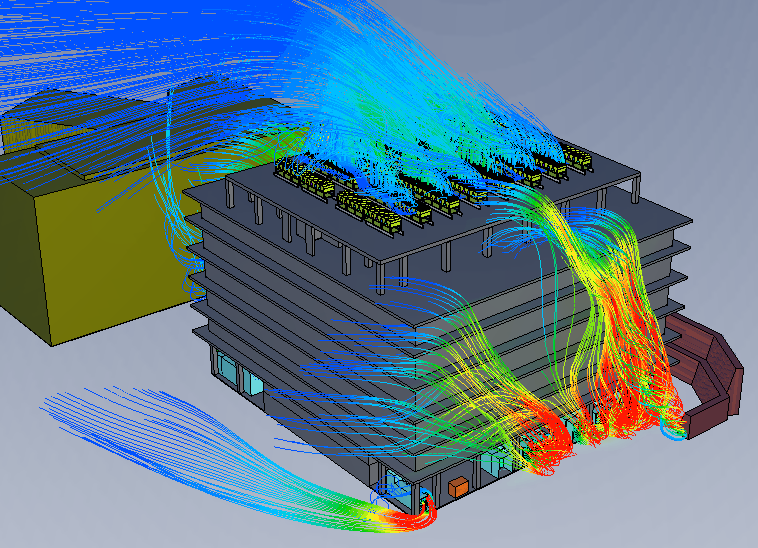
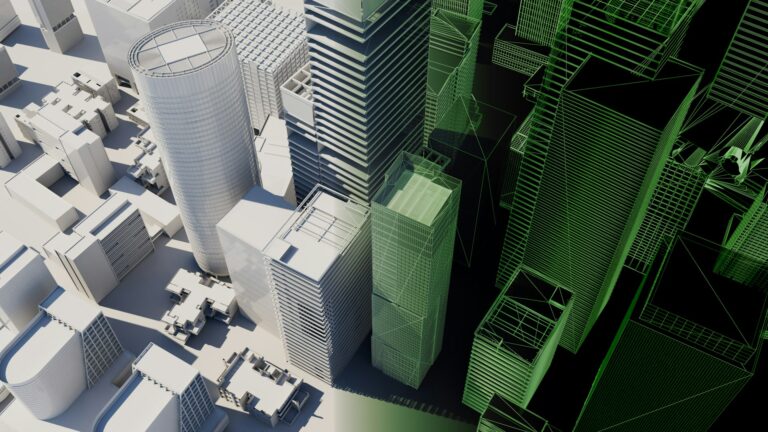
CFD simulation uses computational software to mathematically predict how fluids — air, water, gases, and even smoke — move through a space or system. Rather than relying on formulas built for simple, idealised conditions, CFD models your actual building or equipment geometry, calculating airflow, temperature, pressure, and humidity at thousands of points at once.
If you want the technical background — the mathematics, the history of the technology, and how the simulation process works — our guide on why CFD simulation matters in engineering projects covers that in depth. This article focuses on something more immediate: the concrete benefits you can expect when you bring CFD into your own project.
1. It Validates Your Design Before Construction Begins
The single biggest advantage of CFD simulation is timing. It lets you test a design’s performance while it’s still just a 3D model — long before concrete is poured or equipment is ordered.
With a proper CFD study, you can confirm:
- Whether airflow distribution and air changes per hour (ACH) meet your target
- Whether temperature and humidity stay within acceptable ranges across every zone
- Whether pressure differentials behave as intended (important for cleanrooms, smoke control, and containment)
- Whether your equipment is sized correctly for the load it will actually see
Catching a design flaw at this stage costs you engineering hours. Catching the same flaw after installation costs you contractors back on-site, equipment replacement, and project delays — often at a multiple of the original budget.
2. It Uncovers Airflow and Thermal Problems You Can’t See on Paper
Some of the most damaging design flaws are invisible until a building is occupied or a system is running. Dead air pockets, recirculation loops, and “short-circuiting” — where supply air flows straight back to the return grille without ever cooling the space — rarely show up in standard calculations.
CFD simulation exposes these issues directly, revealing:
- Dead zones where air barely circulates, leading to stuffiness or contamination risk
- Hotspots where heat accumulates faster than it can be removed
- Thermal stratification, common in atriums, warehouses, and high-ceiling spaces, where warm air pools near the ceiling while occupied zones stay uncomfortably cool
- Condensation risk, by identifying surfaces likely to fall below dew point
For a facility like a data hall or a cleanroom, finding these problems in simulation — rather than through complaints or failed audits — is the difference between a smooth handover and a costly retrofit.

3. It Reduces Costs Across the Whole Project Lifecycle
CFD simulation pays for itself in a few different ways, not just one.
- Right-sized equipment. Without simulation, design teams often apply generous safety margins to compensate for uncertainty — resulting in oversized chillers, CRAC units, or fans that cost more upfront and consume more energy for the life of the building.
- Avoided rework. Fixing a cooling or ventilation problem after construction typically means bringing contractors back on-site, and sometimes replacing equipment entirely.
- Less physical testing. Wind tunnel tests, scale mock-ups, and full-size prototypes are expensive and slow to iterate. A CFD model lets you test several design variations digitally at a fraction of the cost, and only build what you’ve already validated.
The net effect is a project that spends money on the right things — better design certainty — instead of on margin for error and after-the-fact fixes.
4. It Speeds Up Design and Approval Timelines
Testing a design change physically — building a new mock-up, re-running a wind tunnel test, or waiting for post-installation data — can take weeks. Adjusting a CFD model and re-running the simulation typically takes days.
This speed matters for two reasons:
- Your design team can compare multiple configurations (equipment layout, diffuser placement, containment strategy) before committing, rather than being locked into the first workable option.
- CFD outputs — visualisations, contour plots, and quantified performance data — are often required as supporting evidence for regulatory and authority submissions, which can shorten your approval cycle rather than triggering a request for more information.
5. It Improves Energy Efficiency and Sustainability Outcomes
Every unit of overcooling, oversized fan capacity, or inefficient airflow translates directly into wasted energy over a building’s operating life. CFD simulation helps you design closer to the actual requirement rather than a padded estimate.
Typical energy-related gains include:
- Optimised natural ventilation design, reducing dependence on mechanical cooling
- Right-sized HVAC and cooling equipment, cutting both capital and running costs
- Data to support BCA Green Mark and similar certification requirements, where airflow and thermal comfort performance must be demonstrated, not assumed
For sustainability-conscious clients, this also means a design that’s easier to defend with real data, rather than back-of-envelope assumptions.
6. It Strengthens Safety and Regulatory Compliance
For a growing number of building types, some form of CFD-backed evidence is now expected — not just recommended — as part of design approval. CFD simulation is used to demonstrate:
- Smoke control and fire safety, modelling smoke movement and tenability during a fire scenario in line with SCDF fire code requirements
- Cleanroom classification, validating airflow uniformity against ISO 14644 standards
- Wind-driven rain and building envelope performance, assessing how wind and rain interact with façades, canopies, and outdoor structures
- Noise and acoustic compliance, particularly for schools and public buildings
Rather than relying on generic assumptions, CFD gives your design team (and the relevant authority) quantified evidence that a system will perform as claimed.
7. It Optimises Data Centre and Mission-Critical Cooling
Data centres are one of the clearest examples of where CFD simulation earns its keep. Cooling failures in a live facility aren’t just inconvenient — they risk equipment damage and downtime.
CFD simulation is used to:
- Evaluate hot aisle/cold aisle containment strategies and CRAC or in-row cooling placement
- Identify bypass airflow and recirculation that quietly erode cooling capacity
- Model equipment or CRAC unit failure scenarios (N+1 and N+2 redundancy) to understand how quickly temperatures rise under fault conditions
- Plan for future capacity expansion without over-cooling in the interim
This is core to what Power Usage Effectiveness (PUE) optimisation looks like in practice — not a single fix, but a series of validated decisions about airflow, containment, and redundancy.

8. It Enables Confident, Data-Driven Decision-Making
Perhaps the most underrated benefit of CFD simulation is what it does for decision-making itself. Instead of relying on rules of thumb or “what’s worked before,” you get quantified answers to specific questions:
- What happens to inlet temperatures if a CRAC unit goes offline?
- Does this diffuser layout actually reach every occupied zone?
- Can this facility handle a planned capacity increase without additional cooling?
Testing these “what-if” scenarios virtually — rather than finding out the hard way — reduces risk and gives project stakeholders a much stronger basis for sign-off than assumptions alone.
Where CFD Simulation Delivers the Most Value
CFD simulation applies wherever air, heat, smoke, or fluid movement affects performance, comfort, or safety. In practice, that spans:
- Data centres and tech infrastructure — cooling, containment, and capacity planning
- HVAC and ACMV building services — thermal comfort, energy performance, and natural ventilation
- Cleanrooms and semiconductor facilities — airflow uniformity and contamination control
- Government, education, and transit projects — school ventilation, MRT stations, natural ventilation for public buildings
- Retail, F&B, and industrial facilities — smoke control, exhaust ventilation, and heat management
- Marine and offshore structures — wind-driven rain and green water loading analysis
When Should You Bring CFD Into Your Project?
CFD simulation delivers the most value the earlier it’s introduced — ideally during conceptual or schematic design, when changes are still cheap to make. That said, it’s also valuable at two other points:
- Troubleshooting an existing system — pinpointing the cause of comfort complaints, hotspots, or energy inefficiency without invasive testing
- Validating a retrofit or expansion — confirming that new equipment, additional server racks, or a reconfigured layout won’t compromise your existing systems
If you’re planning a new build, the best time to talk to a CFD consultant is before your mechanical and electrical designs are locked in.
Why Engineering Teams in Singapore Choose Megagenix for CFD Simulation
Megagenix has delivered CFD simulation and MEP engineering insight for data centres, government buildings, and industrial clients across Singapore and the region since 2022 — with a track record that includes 85+ completed projects and 50+ clients, spanning hyperscale data halls, schools, transit infrastructure, and semiconductor cleanrooms.
What sets the process apart is that simulation results are interpreted by professional, certified engineers — not just handed over as raw visuals. That means every CFD report comes with practical, implementable recommendations tailored to your project’s budget, timeline, and compliance requirements, not just colourful airflow diagrams.
If you’re weighing up whether CFD simulation is worth it for your next project, the fastest way to find out is to talk it through with someone who’s run the numbers on a similar building type before.
Frequently Asked Questions
What are the main benefits of CFD simulation in engineering projects?
The core benefits are design validation before construction, early detection of hidden airflow and thermal problems, lower project costs through right-sized equipment and less physical testing, faster design iteration, stronger energy efficiency, and clearer evidence for safety and regulatory compliance.
Does CFD simulation replace the need for physical testing?
No. CFD narrows down the number of design options worth testing physically, and identifies the strongest candidate before you commit resources to it. For critical systems, physical commissioning and testing still play a role — CFD simply removes most of the guesswork and wasted iteration that used to come before it.
Is CFD simulation only useful for large projects like data centres?
No. While data centres are one of the highest-profile applications, CFD simulation is just as relevant for schools, F&B kitchens, workshops, warehouses, and residential developments — anywhere airflow, heat, or smoke behaviour affects comfort, safety, or compliance.
How long does a typical CFD simulation study take?
It depends on the complexity of the project and the number of scenarios being tested. A straightforward ventilation study can take a couple of weeks; a multi-scenario data centre analysis with failure-mode testing takes longer. Engaging a CFD consultant early in your project timeline gives the most flexibility to fit the study around your schedule.