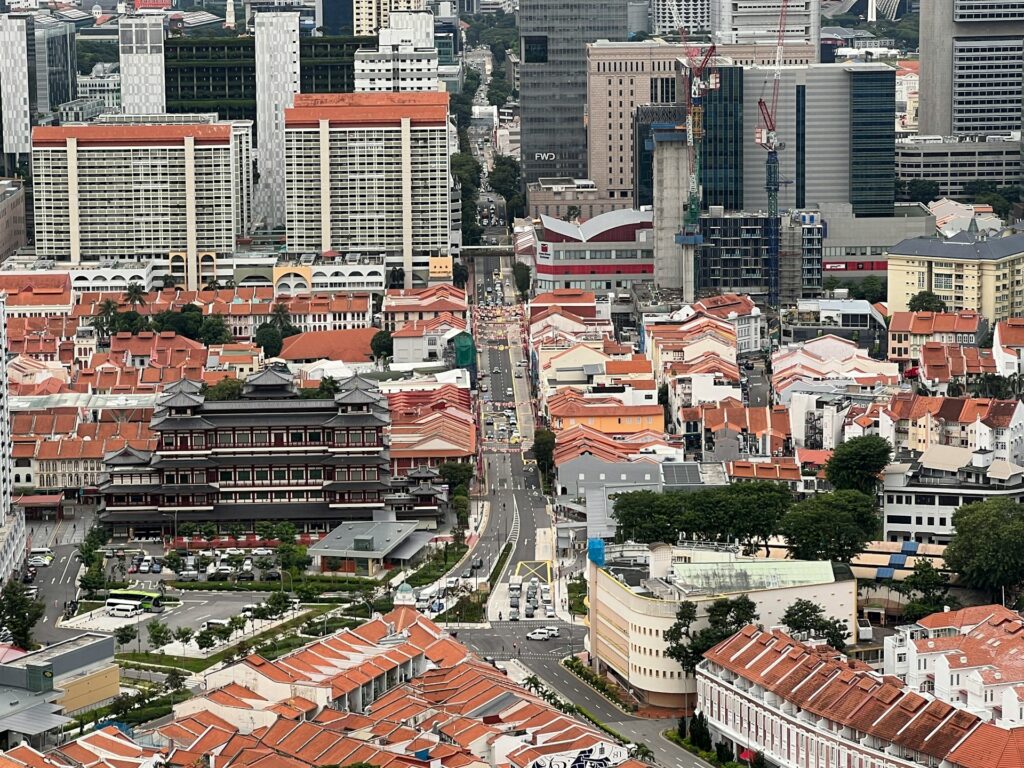
Most of the buildings Singapore will rely on in 2030 are already standing. Many were designed to standards that are now well out of date, with cooling plants, controls and ventilation systems that have drifted further from their original performance every year. This guide sets out the order we recommend to retrofitting an older building in Singapore.
Building owners are under growing pressure to improve them. Energy costs, tenant expectations, Green Mark targets and BCA regulations all point the same way. The question is rarely whether to retrofit an older building, but where to start, and how to avoid spending heavily on the wrong thing.
In our experience, the most expensive retrofit mistakes happen before any equipment is bought: replacing a chiller when the real problem was the controls, or upgrading ventilation without checking how air actually moves through the space.
Why Older Buildings Underperform
An older building’s systems rarely fail all at once. Performance drifts gradually:
- The building’s use has changed. Tenants, layouts, occupancy and operating hours are different from what the systems were designed for.
- Controls have been overridden. Setpoints get adjusted to fix individual complaints, schedules are extended, and equipment is left in manual mode.
- Equipment has aged. Chillers, pumps and fans lose efficiency, and sensors drift so the control system works from wrong information.
- The original design was oversized. Generous safety margins mean equipment spends most of its life running at inefficient part load.
The result is a building that uses more energy than it needs to and is often less comfortable than it should be, at the same time.
The Right Order for an Existing Building Retrofit
Step 1: Understand How the Building Actually Performs
Start with data, not equipment catalogues. Utility bills, building management system (BMS) trend logs, chiller plant readings and tenant complaint records together show where the building uses energy and when. Where data is missing or unreliable, temporary metering fills the gaps.
This step often reveals that the biggest losses aren’t where the owner expected.
Step 2: Audit the Systems
An engineering audit checks how the main systems are operating against how they should operate: the chiller plant, air-handling units, pumps, ventilation and controls. For buildings with central cooling, this overlaps with the periodic energy audit that BCA can require for building cooling systems.
Step 3: Fix the Operational Problems First
Before any capital spend, recover what’s been lost through operation: correct setpoints, schedules, sequencing and faulty sensors. This process, often called retro-commissioning, is usually the cheapest saving available, and it also gives a true baseline for judging whether new equipment is worth it.
Step 4: Model the Upgrade Options
Upgrades interact. A more efficient chiller changes the case for variable speed pumps. Better ventilation changes the cooling load. Testing options one at a time on paper misses these interactions.
With building energy modelling, we simulate the building against Singapore’s weather and its real load profile across a full year, and compare packages of upgrades on their actual energy and cost impact. Where comfort or airflow is part of the problem, CFD simulation shows how air moves through the space and whether a proposed change will fix it.
Step 5: Prioritise by Return, Then Implement
Upgrades typically fall into three tiers:
| Tier | Examples | Typical character |
|---|---|---|
| Operational | Resequencing chillers, adjusting setpoints, fixing sensors, correcting schedules | Low cost, fast payback, little disruption |
| Component upgrades | Variable speed drives, EC fan retrofits, control system upgrades, LED lighting | Moderate cost, payback usually within a few years |
| Major plant replacement | New chillers, cooling towers, air-handling units | High cost, long life, often triggers BCA requirements |
Step 6: Measure the Results
After the work is done, measure the actual savings against the baseline from Step 1. This confirms the investment delivered and, where funding is involved, is usually a requirement.
Regulations and Incentives to Plan Around
- Minimum standards when replacing cooling systems. Existing buildings of 5,000 square metres gross floor area or more (excluding certain building types) must meet BCA’s minimum environmental sustainability standards when they install or replace their cooling system, with the design verified by a Professional Engineer.
- Periodic energy audits. BCA can require building owners to audit their cooling system’s operating efficiency, conducted by a Professional Engineer (Mechanical) or a BCA-registered energy auditor.
- Co-funding. BCA’s Green Mark Incentive Scheme for Existing Buildings 2.0 (GMIS-EB 2.0) can co-fund energy improvement works in eligible private buildings that reach higher Green Mark levels. Approval must be obtained before work starts, so it needs to be considered at the planning stage, not after.
Factoring these in early avoids redesigns, missed funding and delays.
Common Retrofit Mistakes
- Replacing equipment to fix a control problem. New chillers running on the old, poorly configured sequencing will underperform.
- Sizing new equipment from the original design load. The building’s actual load today is often lower. Measure it.
- Treating upgrades separately. Individual business cases that ignore each other can double-count savings.
- Starting work before applying for funding. Under GMIS-EB 2.0, work started before BCA’s Letter of Acceptance may not qualify.
- Getting advice only from equipment suppliers. Suppliers know their products well, but an independent view helps confirm the product is the right answer.
A Scenario We See Often: The 1990s Office Building Facing a Chiller Replacement
The owner of a 1990s office building has been told the chillers are near the end of their life. A contractor has quoted for like-for-like replacement, sized to match the existing plant. At the same time, tenants complain that some floors are too cold and others stuffy, and the energy bill keeps rising.
Replacing the chillers like-for-like would lock in the original design load for another twenty years. But the building today has different tenants, more efficient lighting and IT equipment, and different operating hours, so its real cooling load is often well below what the plant was sized for. The comfort complaints usually point to air-side and control problems that new chillers won’t fix.
In a project like this, our engineers would:
- Measure the building’s actual cooling load, using plant data and temporary metering where needed, before any equipment is sized.
- Investigate the comfort complaints, using CFD where airflow is the issue, so the retrofit fixes them rather than just replacing the plant.
- Model several upgrade packages, such as right-sized chillers with variable speed pumps and control upgrades, against the like-for-like option.
- Check eligibility for GMIS-EB 2.0 co-funding and the BCA requirements that apply when the cooling system is replaced, before work is committed.
The result is a retrofit sized for how the building is used today, with a clear view of cost, savings and comfort before the contract is signed.
How Megagenix Supports Existing Building Retrofits
We’re an independent engineering consultancy. We don’t sell or install equipment, so our recommendations aren’t tied to any product. For existing buildings, our engineers:
- review performance data and audit the cooling, ventilation and control systems;
- identify operational fixes that recover performance before any capital spend;
- model upgrade packages with building energy modelling and CFD to compare their real impact;
- prepare the technical basis for regulatory submissions and funding applications;
- verify the results after the work is complete.
If you own or manage an older building and want to know where to start, speak to our engineers.
Frequently Asked Questions (Retrofitting an older building in Singapore)
Where should I start when retrofitting an older building?
Start by understanding how the building actually performs, using utility bills, BMS data and an engineering audit. Fix operational problems such as setpoints and sequencing first, then model upgrade options before committing to new equipment.
Is it better to replace the chiller or fix the controls first?
Fix the controls first. Operational improvements are usually cheaper and quicker, and they show the building’s true baseline. A new chiller running on poor controls won’t deliver its expected savings.
Are there grants for retrofitting existing buildings in Singapore?
Yes. BCA’s Green Mark Incentive Scheme for Existing Buildings 2.0 co-funds energy improvement works in eligible private buildings of at least 5,000 square metres that reach Green Mark Platinum or higher. Approval is needed before work starts.
https://www1.bca.gov.sg/grants-and-funded-programmes/green-mark-incentive-scheme-for-existing-buildings-2-0/
Why use simulation before a retrofit?
Upgrades interact with each other, and the building’s real load profile is often different from its original design. Energy modelling and CFD let you compare options on their actual impact before spending money on equipment.