Physical testing has been the engineering gold standard for decades. But in Singapore’s increasingly complex built environment — where data centres must run at sub-degree thermal tolerances, Green Mark compliance is non-negotiable, and construction timelines leave little room for iteration — the question isn’t whether to use CFD simulation. It’s knowing exactly when simulation beats a physical test, when it doesn’t, and when you need both working together. Let us share what CFD Simulation vs physical testing is all about.
This guide breaks that down with real engineering scenarios, not marketing claims.
What’s Actually Being Compared
Before drawing conclusions, it’s worth being precise about what each method delivers.
Physical testing means building a prototype, a scale model, or instrumenting an actual system and measuring real fluid behaviour — pressures, temperatures, velocities — under controlled or real-world conditions.
CFD simulation (Computational Fluid Dynamics) uses numerical methods to solve the governing equations of fluid flow — the Navier-Stokes equations — across a discretised computational domain. The software predicts velocities, pressures, temperature gradients, and species concentrations at every point in the model simultaneously, without touching a physical object.
Neither is universally superior. The better choice depends on what you need to know, how accurately you need to know it, and what you can afford — in time and money.
When CFD Simulation Is the Better Choice
1. The Design Doesn’t Exist Yet
This is the most common scenario in Singapore engineering practice. You’re designing a new building’s natural ventilation strategy, specifying CRAC unit placement for a proposed data centre, or sizing an HVAC system for a mixed-use development. There is no physical object to test.
CFD lets engineers run dozens of design iterations — adjusting duct geometry, louvre angles, diffuser positions, or floor layouts — in the time it would take to build a single physical mockup. For a natural ventilation study on a commercial tower, we typically evaluate four to eight design configurations before converging on the optimal solution. Each iteration takes days computationally. The equivalent physical wind tunnel programme would take months and cost multiples more.
2. Scale Makes Physical Testing Impractical
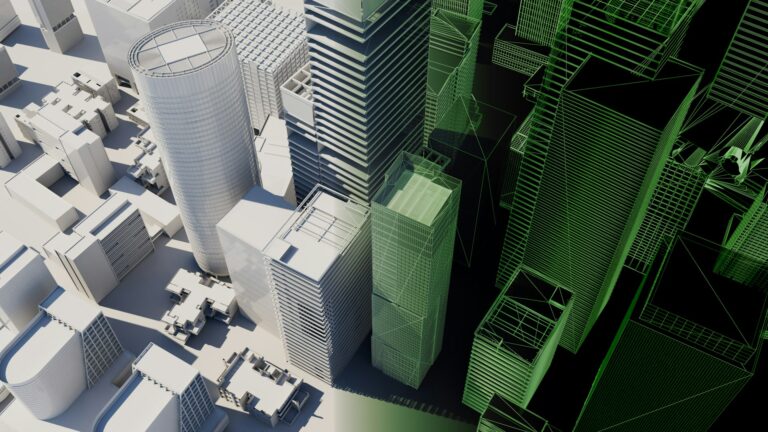
Large-scale outdoor scenarios are where CFD’s advantage is clearest. Pedestrian wind comfort studies across a five-block urban precinct, pollutant dispersion from an industrial stack, or smoke propagation through an MRT station during a fire event — none of these can be meaningfully tested at full scale physically.
Scale models introduce distortions. The Reynolds number (a dimensionless ratio of inertial to viscous forces) changes when you shrink a model, meaning turbulent flow patterns in a 1:50 scale wind tunnel test don’t accurately represent full-scale behaviour. CFD models the actual full-scale geometry and flow conditions directly.
3. You Need Whole-Field Data, Not Point Measurements
A physical test gives you data where you put sensors. If you instrument a plant room with 20 thermocouples, you get temperature at 20 points. CFD gives you temperature, velocity, pressure, and humidity at every point in the domain — often tens of millions of data points from a single simulation run.
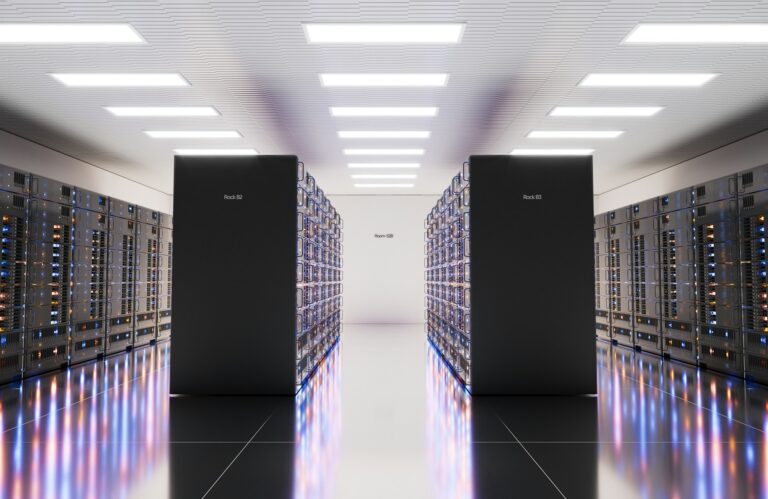
For a data centre CRAC balancing study, this distinction is critical. Hot spot formation is a localised phenomenon; you need to know the temperature at every rack inlet, not just where sensors happen to be installed. CFD reveals the full thermal landscape. Physical measurement can only sample it.
4. You’re Testing Hazardous or Regulatory-Sensitive Scenarios
Explosion and combustion modelling, toxic gas dispersion from a chemical release, or smoke modelling for SCDF fire safety submissions — these scenarios cannot ethically or legally be tested physically in a real environment, and physical simulation in a controlled chamber has its own regulatory and cost barriers.
CFD lets engineers evaluate worst-case scenarios — a worst-case wind direction for pollutant dispersal, the maximum credible explosion overpressure in a confined space, smoke layer descent rates in a carpark — without any physical risk. For SCDF performance-based fire safety designs, CFD simulation is specifically accepted as the basis of submission.
5. Design Iteration Speed Matters More Than Absolute Accuracy
In early-stage design, the goal isn’t a perfectly accurate prediction — it’s understanding how design choices affect performance. Does moving the air supply plenum 500mm upward improve temperature uniformity in the occupied zone? Does increasing the aperture in the void deck from 15% to 25% porosity meaningfully improve cross-ventilation?
CFD answers these directional questions quickly and cheaply. The relative performance difference between two design options is typically reliable even when the absolute predicted values carry ±10% uncertainty. Physical testing at this stage would lock you into configurations too early and cost far more per data point.
When Physical Testing Is Still Necessary
CFD has limits, and being honest about them matters more than overselling the technology.
Complex Turbulence and Multiphase Flows
Some flows are so turbulent, or involve such complex interactions between phases (liquid droplets in gas, bubbles in liquid, particles in airflow), that validated CFD models don’t yet exist or require so much computational resource that they’re impractical. In these cases, physical testing anchors the simulation.
Regulatory Submissions Requiring Physical Evidence
Certain certifications — particularly in aerospace and some pharmaceutical manufacturing contexts — require physical test data as part of the submission, regardless of CFD results. For Singapore’s Green Mark assessments, CFD is accepted but some assessors may require physical air velocity spot-checks to validate model outputs on completed buildings.
Novel Geometries With No Prior Validation
If your project involves a geometry or flow regime for which no validated CFD model exists, you’re extrapolating. Responsible CFD practice requires physical validation data in at least one configuration before extending the model to others. This is especially relevant for experimental architectural forms or new process equipment designs.
The Hybrid Approach: How Most Complex Projects Actually Work
In practice, the most rigorous engineering programmes use CFD and physical testing together, each playing a different role at different project stages.
Stage 1 — Concept CFD: Wide exploration of design options. High iteration count, coarser mesh, parametric studies. Goal: eliminate poor performers and identify the 2-3 best candidates.
Stage 2 — Detailed CFD: High-fidelity simulation of shortlisted designs. Fine mesh, validated turbulence models, sensitivity analysis on boundary conditions. Goal: confident performance prediction.
Stage 3 — Physical validation (where required): Physical test on the selected design, either a prototype or early commissioning measurement on site. Goal: validate CFD predictions and satisfy any regulatory requirement for physical evidence.
Stage 4 — Operational CFD: Post-occupancy, if the built environment doesn’t perform as predicted, updated CFD using measured site data to diagnose and resolve the issue.
This is the workflow Megagenix follows on data centre projects, where we build the simulation model, validate it against actual CRAC unit performance data and temperature measurements at the rack level, then use the validated model for ongoing capacity planning as IT load evolves.
Singapore-Specific Considerations
Singapore’s engineering context shapes the CFD vs physical testing calculation in specific ways.
Green Mark BCA requirements actively support CFD submission for natural ventilation assessments. The BCA Green Mark for Buildings (2021) accepts CFD as the methodology for demonstrating compliance with natural ventilation criteria under GM:2021 credit categories.
SCDF performance-based design for fire safety allows CFD fire and smoke modelling (using tools like FDS — Fire Dynamics Simulator) as the basis for alternative compliance paths where prescriptive code solutions are impractical. This has made CFD an essential tool for atypical building geometries.
Urban density means physical wind tunnel testing for pedestrian wind environments, while still conducted, faces challenges: Singapore’s rapid urban development means the surrounding context changes faster than physical model updates can keep pace. CFD models can be updated quickly as new buildings are added to the surrounding context.
Data centre density — Singapore hosts one of the highest concentrations of hyperscale and colocation data centres in Southeast Asia. The thermal management requirements at facilities operated by Amazon Web Services, NTT, and comparable operators demand the granular, full-field thermal data that only CFD can provide at reasonable cost.
Common Mistakes Engineers Make When Choosing Between CFD Simulation Vs Physical Testing
Treating CFD as always cheaper. For a simple one-off validation question with a well-understood geometry, a physical test is sometimes faster and cheaper than setting up, meshing, and running a CFD study. The economics shift strongly toward CFD when you need multiple iterations or full-field data.
Skipping mesh independence studies. A CFD result is only as reliable as its mesh. If the result changes significantly when you refine the mesh, you haven’t converged yet. We see consultants present CFD results without demonstrating mesh independence — this is a fundamental quality failure.
Using CFD to validate CFD. Comparing two simulations of the same geometry using different solvers is not physical validation. If your project requires validated CFD, you need at least one physical measurement to anchor the model.
Over-trusting generic turbulence models. The k-ε and k-ω models built into standard CFD packages are adequate for many flow regimes but fail in strongly swirling flows, highly buoyant flows, and some separation scenarios. Knowing when to use more sophisticated turbulence modelling (LES, RSM) is an expertise question, not a software question.
Frequently Asked Questions about CFD Simulation vs Physical Testing
How accurate is CFD simulation compared to physical testing? For well-validated models in common flow regimes (HVAC, natural ventilation, data centre cooling), CFD typically achieves ±10–15% accuracy against physical measurements for velocity and temperature. This is sufficient for design decision-making in most applications. For safety-critical applications, physical validation is performed to confirm model accuracy before relying on simulation for regulatory submissions.
Does BCA or SCDF accept CFD results for compliance submissions in Singapore? Yes. BCA accepts CFD for natural ventilation assessments under Green Mark. SCDF accepts performance-based CFD fire and smoke modelling as an alternative compliance pathway. The simulation must be performed by a qualified professional and meet the technical requirements specified in the relevant guidelines.
How long does a CFD simulation take compared to building a physical prototype? A typical building ventilation CFD study (from geometry import to final report) takes 2–4 weeks depending on complexity. A comparable physical wind tunnel test for the same geometry, including model fabrication, typically takes 6–12 weeks. For data centre CRAC balancing, CFD can deliver results in 1–2 weeks; physical commissioning measurements take similar time but yield far less data.
What information do I need to provide to start a CFD study? Architectural drawings or 3D CAD model (IFC, DWG, or STEP format), boundary conditions (occupancy levels, equipment heat loads, outdoor climate data), and the specific performance questions you need answered. Megagenix can work from early-stage schematics — the model is built by our engineers, not imported directly from your files.
Is CFD simulation only for large projects? No. CFD is cost-effective for projects of many sizes. Small-scale applications — a single server room, a warehouse smoke extraction system, a fume hood design — are common. The simulation cost scales roughly with domain complexity and number of iterations required, not building size.
Working With a CFD Consultant in Singapore
Choosing between CFD simulation and physical testing is ultimately a question of what decision you need to make and what evidence standard that decision requires. The cost advantage of CFD is real, but it’s only realised when the simulation is set up correctly, validated appropriately, and interpreted by engineers who understand both the physics and the regulatory context.
Megagenix provides CFD simulation consulting and MEP solutions across Singapore’s building, infrastructure, and industrial sectors. Our engineers are PE-credentialed and have delivered CFD studies for government agencies, hyperscale data centres, MRT infrastructure, and semiconductor facilities.
Ready to scope a CFD study for your project? Contact our team for a consultation.