CFD Simulation Consulting & MEP Solutions in Singapore
As Singapore’s trusted consultancy company, we provide expert CFD solutions and MEP engineering insights, helping you make informed decisions with confidence.
Our CFD Simulation capabilities encompass a wide range of scenarios, each tailored to meet specific engineering requirements. These include:
Pollutant Dispersion in Urban Environments
Address urban environmental challenges with our specialised computational fluid dynamics (CFD) simulations. Our team provides advanced analysis of pollutant dispersion in urban settings, helping to assess the impact of emissions from industrial and vehicular sources on air quality.
Natural Ventilation Analysis for Green Mark Certification
Through our computational fluid dynamics consulting services, we’ll assist you in meeting Green Mark certification standards in Singapore or globally by accurately modelling airflow patterns that optimise natural cooling and reduce energy consumption, helping you to achieve sustainability and energy efficiency in your building projects.
Data Centre Cooling, Airflow And CRAC Balancing Design and Analysis
Talk to our CFD consultant in Singapore and maximise your server performance with our specialised cooling and airflow simulation via data center cooling CFD. We fine-tune the balance of CRAC (Computer Room Air Conditioners) and airflow dynamics to ensure your data centres maintain ideal temperature conditions, boosting efficiency and reliability.
Noise Reduction and Acoustic Analysis
Our CFD consultancy employs advanced simulation tools to assess and optimise the acoustic performance of various environments, from commercial buildings to industrial facilities, helping you with the compliance of noise regulations and creating quieter, more comfortable spaces.
Explosion and Combustion Analysis
Safeguard your operations with our explosion and combustion analysis. Using our simulation technology, we can model and predict the behaviour of gases and combustibles under various conditions to prevent accidents and enhance safety protocols.
Macro and Micro Climatic Analysis
From large-scale weather patterns to localised climatic effects, approach our CFD consultation to see how we can provide crucial data that informs sustainable building design and urban planning, ensuring your projects are resilient and environmentally harmonious.
Vibration Analysis
By simulating the impact of fluid movements, our services help design safer, more efficient containers and support structures that reduce the risk of sloshing-related incidents in various industries, such as oil, gas, and shipping.
Fire and Ventilation Analysis
Enhance safety and compliance in your facilities with our fire and ventilation analysis services. Talk to our CFD consultant, and let us assist you in simulating and analysing fire behaviour and smoke propagation, ensuring your ventilation systems are effectively designed to manage emergencies.
Heat Transfer And Thermal Analysis
Enhance system performance with precise thermal management. We can provide detailed insights into heat distribution and identify potential hot spots, helping you to optimise the thermal behaviour of your systems for better efficiency and safety.
Fatigue And Fracture Analysis
Extend the life of your materials with our fatigue and fracture analysis. Our computational fluid dynamics consulting services offer predictions on how materials will respond to stress and pressure over time, helping to prevent failures and ensure the durability of your company materials.
Water Treatment and Filtration Analysis
Optimise your water treatment and filtration systems with our CFD consulting services. We analyse flow patterns and filtration processes to enhance the efficiency and effectiveness of water treatment, ensuring compliance with environmental standards and improving the overall sustainability of your operations in Singapore.
Evaporation Cooling
Get in touch with our CFD consultant to explore and optimise your evaporative cooling strategies. We model the cooling effects of evaporation to provide cost-effective solutions for your company, assisting you in maintaining optimal temperatures in challenging environments.
Green Water Loading Analysis
Protect marine vessels and offshore platforms with our green water loading analysis. We simulate the effects of ocean water impacts on structures, helping you design and reinforce vessels to withstand harsh marine environments, ensuring safety and longevity.
Wind-Driven Rain
Manage and mitigate the impact of wind-driven rain on your buildings and structures. Our advanced CFD simulations help you assess how wind patterns and rain interact with architectural designs, facilitating better waterproofing solutions and enhancing the durability and comfort of your buildings.
Each of these scenarios presents its own set of challenges and requires specialised CFD Simulation approaches. Our CFD consultancy team in Singapore is equipped with the knowledge and tools to conduct detailed analyses and provide insights for CFD-related concerns, as well as mechanical engineering, electrical engineering or fire protection solutions.
Each of these scenarios presents its own set of challenges and requires specialised CFD Simulation approaches. Our consultancy team in Singapore is equipped with the knowledge and tools to conduct detailed analyses and provide insights for optimal engineering solutions.
Our Full Range of Services

CFD Simulation & Analysis Consulting
Save costs, improve system performance & have better control over your premises. Megagenix CFD Design addresses your challenges.
Find Out More >
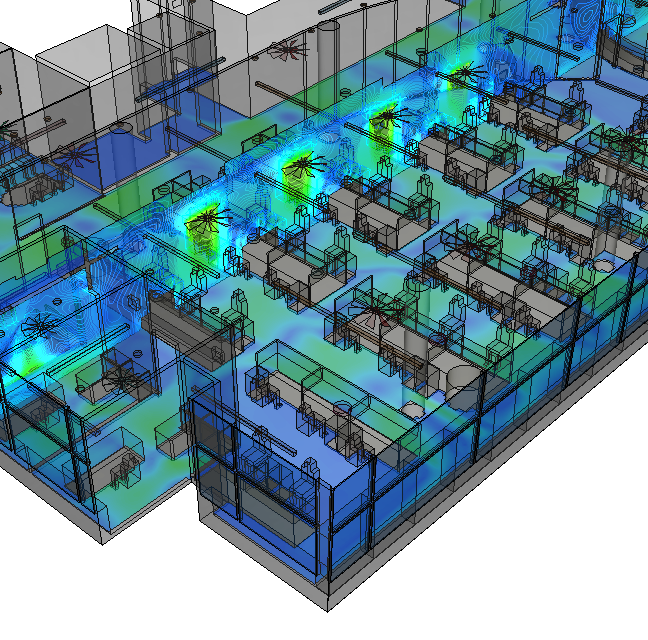
CFD Thermal Analysis
Understand the heat transfer & thermal distribution to facilitate safer & better designs. Reach out to us today for CFD thermal analysis in Singapore.
Find Out More >
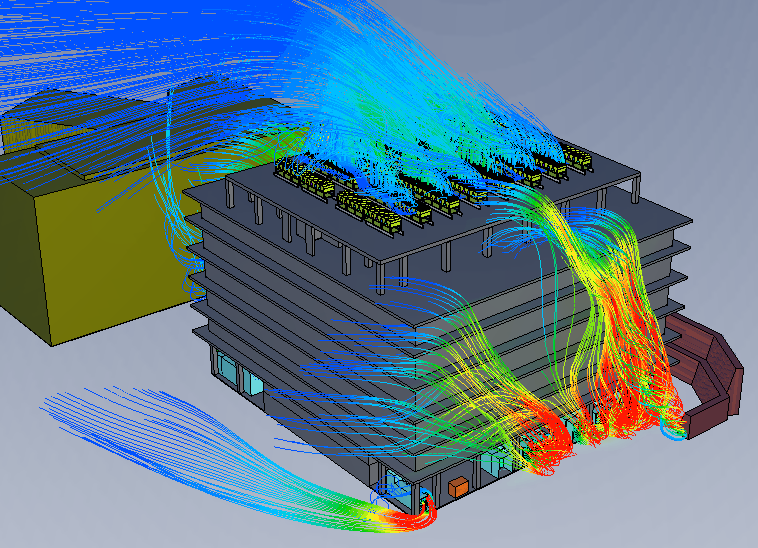
CFD Natural Ventiliation
Get accurate data on natural ventilation in rooms, buildings & more with our CFD modelling service in Singapore. Get consultation & quote here.
Find Out More >
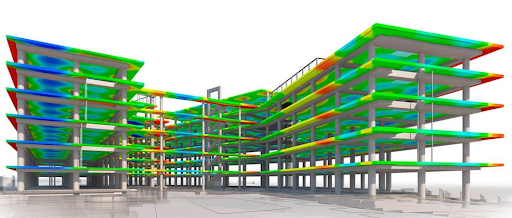
FEA Consulting
Our Finite Element Analysis (FEA) services give you a detailed assessment of how structures respond to real-world conditions and physical effects..
Find Out More >
CFD Thermal Analysis
Understand the heat transfer & thermal distribution to facilitate safer & better designs. Reach out to us today for CFD thermal analysis in Singapore.
Find Out More >
CFD Natural Ventiliation
Get accurate data on natural ventilation in rooms, buildings & more with our CFD modelling service in Singapore. Get consultation & quote here.
Find Out More >

One-Stop Design & Build Services
Achieve your project goals within budget. We ensure quality & excellence in every ACMV design and build, customised to your needs.
Find Out More >

Megagenix Integrated Solutions
From CFD Simulation, BIM/VDC Production, MEP/C&S, to Analysis, Rendering, Modelling and Tender Preparation, consult our expertise.
Contact Us >

Commercial ACMV Services
From custom design work to maintenance and repair, we take care of your ACMV needs from end-to-end. Get professional guidance here.
Find Out More >

Building Information Modelling (BIM)
We provide multi-dimensional BIM services from project conception right through to construction and up until handover and beyond.
Contact Us >

EC Fan Retrofitting, Replacement & Upgrading
Reduce energy consumption and lower ongoing maintenance costs., We supply, install, test, commission & manage everything for you.
Find Out More >

Preventive Maintenance Services
At Megagenix, we resolve faulty issues before they become a major crisis. Operate smoothly while we prolong system lifespan.
Find Out More >
Preventive Maintenance Services
At Megagenix, we resolve faulty issues before they become a major crisis. Operate smoothly while we prolong system lifespan.
Find Out More >
Project Lists
Government Projects
- Hybrid Cooling System simulation for Ministry of Sustainability and Environment Office
- Hybrid Cooling System simulation for Ministry of Finance
- Hybrid Cooling System simulation for National University of Singapore
- Fire and Smoke simulation for Orchard Road MRT
- Waste Water System Design simulation for PUB
- Hybrid Ventilation Design simulation for SBS Depot station
- Natural Ventilation simulation for Tengah Air Base
- Natural ventilation simulation for DSTA Singapore
- MOE School Ventilation Design Simulation (98 Schools)
Wind Engineering & Green Mark Related
- Microclimate simulation for Amazon Global Data Center
- Microclimate simulation for NTT Global Data Center
- Hybrid Cooling System simulation for Tanah Merah Ferry Terminal
- Thermal Comfort simulation for Apple Town Hall
Wind Driven Rain
- WDR analysis for Tengah Air Base
- WDR simulation for Amazon Global Data Center
- WDR simulation for NTT Global Data center
- WDR analysis for a MRT Station
- WDR analysis for CSF building Malaysia
- WDR and storm tank optimization analysis for an airport terminal in Thailand
- WDR and rainwater harvesting system analysis for an industrial facility in India
- WDR analysis for a royal palace in Qatar
Mechanical Ventilation
- MV System Design Simulation for Micron Singapore Pte Ltd
- Genset Design Validation for Genset OEM
Environmental Engineering System
- Clean Room Design Validation for Micron Semiconductor Asia Pte Ltd
- Wet Scrubber for Micron Semiconductor Asia Pte Ltd
- Water Turbine for Micron Semiconductor Asia Pte Ltd
- Mixture oil homogeneous mixing simulation for SINOPEC
- Oil Sparging System simulation for VOPAK Terminal Singapore Pte Ltd
- Warehouse Building thermal simulation @ Pandan Road
- Warehouse Building Concrete Conduction simulation @ Pandan Road
- Passive Displacement Ventilation simulation for Temasek Polytechnic
- Car Workshop Ventilation simulation for Eurokar Showroom
- Transformer Room Ventilation design validation for Singapore M&E Consultant firm
Noise Reduction and Acoustic Analysis
- MOE School Acoustic Design Simulation
Fire and smoke Control
- Fire and Smoke simulation for Jelita Shopping Centre
- Fire and Smoke simulation for Orchard Road MRT

Your Expert CFD Consultants & Professional Engineers
Megagenix provides CFD / ACMV / HVAC Consultation for Commercial Applications.
- Planning & Design Drawing
- CFD Simulation & Modelling
- Troubleshooting & Analysis
What Is a CFD Consultant?
A CFD consultant operates at the intersection of technology and engineering, applying computational tools to model and solve problems regarding fluid dynamics. This role is often pivotal in industries where fluid behaviour can significantly impact system design and efficiency.
Key Aspects of CFD Analysis
Design Validation: Enables early detection of potential issues, facilitating design refinements before physical prototypes are developed.
Enhanced HVAC System Design: Offers detailed insights into airflow and thermal conditions, surpassing the capabilities of traditional design methods.
Operational Efficiency: Post-installation analysis ensures systems are functioning as intended, adhering to performance benchmarks.
About Our CFD Consulting Services
CFD Consulting Services bridge the gap between theoretical analysis and practical application. At Megagenix, our approach integrates advanced simulations with real-world engineering expertise. Our service highlights include:
Comprehensive Fluid Dynamics Analysis
We delve into the intricate details of fluid flow, examining velocity, pressure, viscosity, density, and temperature under various operational conditions. Our simulations are designed to mirror real-world scenarios, providing insights that are both accurate and applicable.
Design and System Optimisation
Leveraging the power of CFD, we refine and optimise system designs. This process not only enhances performance but also plays a crucial role in reducing operational costs. Our approach is especially beneficial in complex designs where traditional methods may fall short.
Forensic Evaluation and Validation:
Post-installation, our services extend to include forensic evaluation, where systems are rigorously tested against benchmark standards. This ensures that the installations perform as intended and adhere to regulatory compliance.
Performance Forecasting
Before system installation, we use CFD to forecast performance, identifying potential issues early in the design phase. This proactive approach is vital in avoiding costly errors and delays, allowing for a smoother project flow.
Detailed Insights for HVAC Systems
Our expertise in CFD Simulation provides more precise information than traditional experimental methods, especially crucial for HVAC design parameters. We assist in validating these designs, ensuring they meet both efficiency and comfort standards in Singapore and beyond.
Handling Dynamic Fluid Flows
Understanding that fluid flows are often subjected to various unbalanced forces like winds, heating, and air conditioning, our simulations take into account these dynamic conditions, offering solutions that are robust and adaptable.
Customised Solutions Across Sectors
Whether it’s designing a well-ventilated space in an educational institution or optimising the airflow in a data centre, our customised CFD solutions cater to a diverse range of requirements, helping you to save time and costs.
Collaborative Approach
We work closely with our clients, ensuring that our CFD analyses and recommendations align with their specific needs and project goals. This collaborative approach ensures that the final outcome is both technically sound and practically feasible.
Keywords & Topics
Our Clientele: Who We Serve

Tech & Data Companies
Data Centre Operators can benefit from Megagenix solutions by efficiently managing temperature levels, reducing power consumption & cooling costs.

Shopping Malls & Retail
We use CFD modelling to accurately design and build Smoke Control & Heat Exhaust Ventilation Systems, ensuring public health & safety according to SCDF Regulations.

Government Establishments
Megagenix supports engineers, architects & contractors in the process of designing and building schools, healthcare facilities, public pools, libraries, offices and carparks.

Residential Contractors
Be it HDB, Condo or Landed, Megagenix understands the unique challenges of different landscapes & properties. We implement safety and comfort aspects in your design.

F&B Business Operators
F&B Business Operators can prevent food spoilage and cut wastage losses. Megagenix designs & builds precise mechanical ventilation for proper air circulation.

Business Establishments
Megagenix supports your business with effective ventilation solutions for manufacturers and warehouses with high heat levels. Improve productivity and safety at work.
CFD Simulation & Analysis FAQs
What is Computational Fluid Dynamics (CFD)?
CFD is the process of mathematically predicting physical fluid flow by calculating dynamics using computational formulas.
In CFD Simulation & Analysis, fluid flow and its associated physical properties, such as velocity, pressure, viscosity, density, and temperature, are calculated based on defined operating conditions.
To derive an accurate physical engineering solution, all quantities are calculated simultaneously.
What are the benefits of CFD simulation?
Companies can easily get a real-time perspective on how they can potentially improve their systems using advanced CFD simulation runs.
Efficiency: With CFD Analysis in place, save time, money and labour with quicker data acquisition.
Flexibility: Almost all design-and-build industries look to CFD analysis for optimisation and performance of fluid dynamics such as air flow and heat ventilation.
Simulation: You can preview and assess your design performance first before committing resources into building.
Where can CFD Analysis be applied?
As engineers specialising in mechanical, electrical, plumbing and fire protection services, we use CFD Simulation & Analysis on these common spaces where fluid flows regularly interact:
- Office simulations
- Smoking lounges
- Warehouse fire simulations
- External and make-up air building flows
- Fume hood designs
- Industrial ventilation designs
- Fire management
- Smoke management
- Classrooms
- Vehicular facilities
- Data centres
- HVAC designs
What can I expect in the CFD Process?
When engaging Megagenix for CFD Simulation & Analysis, you’re tapping into a comprehensive and meticulously structured design process. Here’s an overview of the key components and what to expect at each stage:
Initial Consultation and Problem Statement: The process begins with our analysts and engineers working closely with you to define the initial problem statement. This involves understanding your project’s specific challenges and objectives to tailor our approach accordingly.
Application of Mathematical Models and Scientific Knowledge: We utilise a range of mathematical models and rely on our deep scientific knowledge to formulate the basis of the CFD analysis. This ensures that the simulations are grounded in solid scientific principles and are relevant to your specific needs.
Advanced Software Utilisation: Our team employs sophisticated software coded with the latest algorithms for CFD Analysis. This software is instrumental in creating detailed simulations that provide insights into the fluid dynamics within your project.
High-Performance Hardware for Calculations: The computational demands of CFD Analysis are significant. We leverage high-performance hardware to ensure that calculations are performed efficiently and accurately, enabling timely results.
Professional Engineers for Interpretation: Perhaps the most critical aspect of our process is the interpretation of CFD simulation results by our professional engineers. They bring their expertise to analyse the data, offering insights and recommendations that are not only technically sound but also practically viable for your project.
Why does CFD Simulation work better than traditional experiments?
Traditional experiments often comprise multiple variable factors that are difficult to discern. In the past, the only way for an engineer to optimise their design was to conduct physical tests on product prototypes.
With the advancement of technology, CFD Simulation & Analysis can provide accurate and detailed insights on fluid flow patterns to solve and improve design-and-build engineering projects.
Get optimal results while saving on time and resources for the actual build.
What is the approach of Megagenix in integrating CFD Analysis into my engineering project?
When integrating CFD Analyses into projects, Megagenix adopts a comprehensive and methodical approach. Here’s how we ensure effective implementation:
Collaborative Strategy: We begin by establishing a collaborative environment with you and your team. This includes working alongside your architectural and engineering consultants, ensuring that our CFD Analysis complements and enhances your project’s overall objectives.
Focus on Detail: Our commitment is to precision. We meticulously fine-tune every aspect of fluid flow mechanisms within your project. This detailed focus ensures that all fluid dynamics are accurately captured and optimised.
Expert Application: Leveraging our engineering expertise, we apply CFD Analysis in critical areas such as HVAC system design. Our simulations are advanced, tailored to optimise design parameters like airflow, temperature distribution, and energy efficiency.
Occupant Comfort and System Efficiency: A key aspect of our work involves balancing occupant comfort with system efficiency. We consider various factors like the building’s location, airflow diffusers, and supply air rates. Our aim is to calibrate your HVAC system to achieve optimal performance in real-world conditions.
Adaptable Solutions: Whether your project requires subtle modifications or substantial improvements, our team is equipped to provide solutions. We adapt our strategies to meet the unique challenges and needs of your project accordingly.